
Is your nonprofit considering a new website or in need of a new comprehensive/multi-channel fundraising and marketing partner?
Nonprofits often lack the time, capacity, or expertise to take on such complex project like a new website and need outside help. This is where a well-written Request for Prospal (RFP) can ensure you have the right partners in place to complete the project.
In this guide, we will walk through what an RFP is and when it’s needed, what’s involved in the process, and the key components that should be included to make your project successful. To get started, we’ll cover some RFP basics and then dive into the details of the process.
Table of Contents
- What is RFP?
- Why should your nonprofit write an RFP?
- What does the RFP process look like?
- What is included in a nonprofit RFP?
Looking for professional marketing or fundraising services or fundraising services for an upcoming project?
What is an RFP?
The Request for Proposal (RFP) is a document used to outline an organization’s needs for a specific project, such as creating a complex, omnichannel marketing campaign or a managing a large gala event, and invites vendors and service provides to submit a proposal by a certain date detailing how they would fulfill those project requirements and at what cost.
This competitive process allows nonprofits to compare the proposals from different providers. Once the proposals have been reviewed, the nonprofit awards the project to the winning vendor.
Why should your nonprofit write an RFP?
Here are a few reasons why an RFP is beneficial:
- It boosts information exchange. Vendors receive more information up front about the project, and the nonprofit learns more from their proposals, streamlining the comparison process.
- New ideas are introduced. Proposals from different providers may include different perspectives, trends, or ideas the nonprofit hadn’t considered which could lead to improvements.
- Helps you understand the marketplace. Nonprofits may discover new providers, broadening their network, or they could find one that does a better job, especially if they have been using the same vendors.
- Find the ideal partnership. The process can clarify what a nonprofit wants in the vendor partnership, setting expectations about how they communicate, what collaboration looks like, and how project goals will be achieved.
In the RFP process, all these benefits work together to yield more aligned partnerships with more longevity. Finding the right fit is key to project success.
What does the RFP process look like?
A traditional RFP process is often inefficient and costly for nonprofits. You may be working with vague parameters or an ill-defined scope of work, especially if there isn’t clear stakeholder agreement about the project.
But there are small changes you can make to improve the process. Outlined here are the 9 steps for a streamlined nonprofit RFP process:
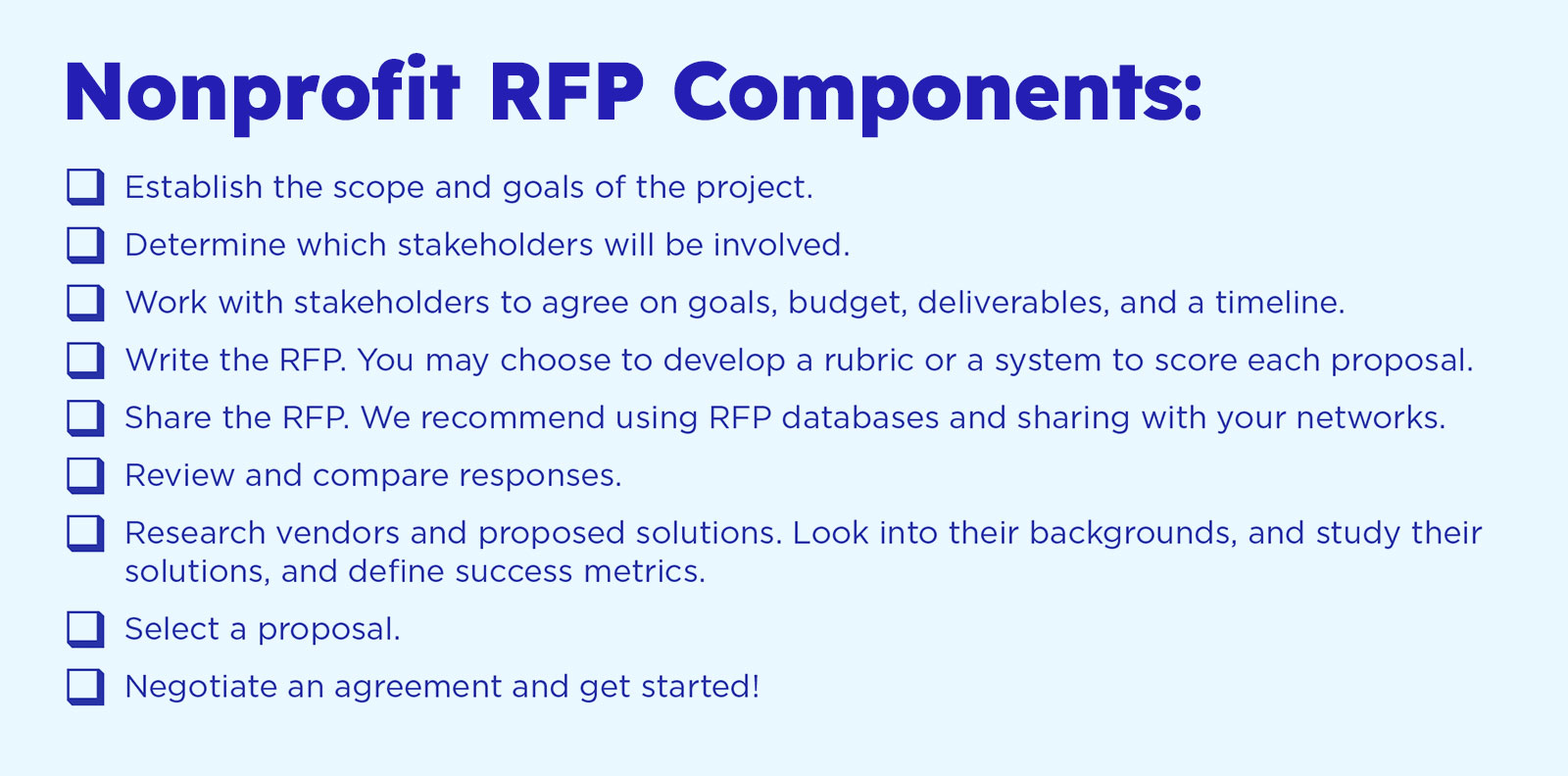
- Establish the scope and goals of the project.
- Determine which stakeholders will be involved.
- Work with staff and stakeholders to agree on goals, budget, deliverables, and a timeline.
- Write the RFP. You may choose to develop a rubric or a system to score each proposal.
- Share the RFP. We recommend using RFP databases and sharing the RFP to your networks.
- Review and compare responses.
- Research vendors and proposed solutions. Look into their backgrounds and study their solutions or technologies used. If you are seeking a marketing agency, for example, request success metrics.
- Select a proposal.
- Negotiate an agreement and get started!
If you are seeking comprehensive, multi-channel retained services, the RFP process will look different. We recommend you explore our more comprehensive, downloadable RFP resource, which contains templates you can use to streamline the nonprofit RFP process.
What is included in a nonprofit RFP?
Before starting the RFP, here are the elements of what should be included:
- A high-level project overview
- An organizational overview
- The scope of the project, including goals and deliverables
- Project timeframe and specific deadlines
- Budget for the work
- Experience-level and/or skillset needed from the vendor
- Your selection criteria
- Specific questions you have for the vendor
- Submission guidelines and deadlines
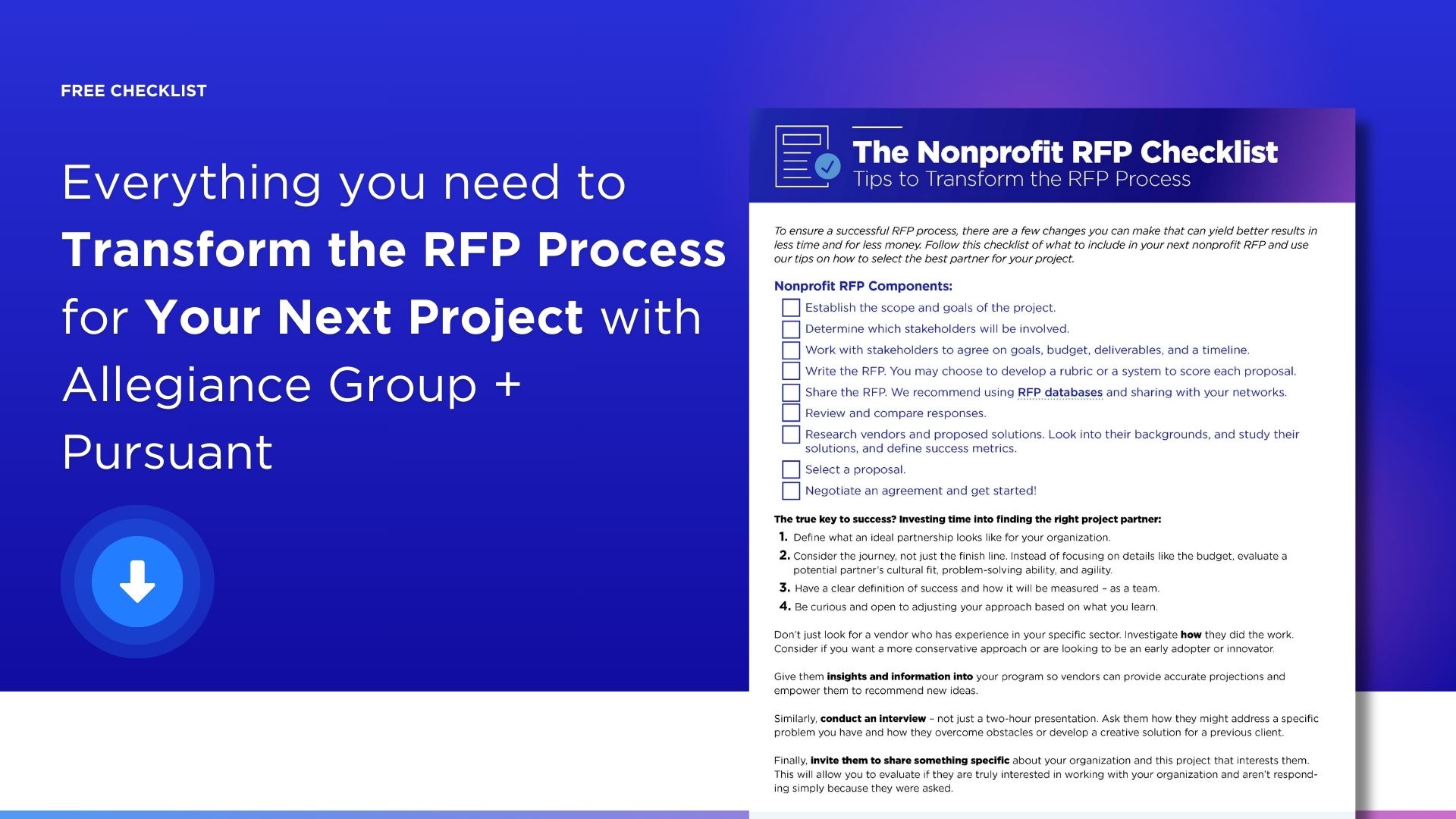
Download our Nonprofit RFP Checklist
Wrapping Up
Make the most of the RFP process to ensure you find the partner and achieve project success. Vendors put time and thought into crafting their proposals, so keep the lines of communication open. And once you do decide and accept a bid, make sure to include clear instructions on what happens next.
Additional resources:
- Think your nonprofit needs a website? Learn whether you have a true need and if you have the capacity for such a project.
- How write a different nonprofit document – a marketing plan guide.