
In the nonprofit-donor relationship, it’s easy to focus on the nonprofit’s needs. After all, we’re building the case for support, and asking for help meeting important needs. But what about your donors? What do they need from you? How can you build a relationship with them?
To build meaningful relationships with your donors, you first need to understand how their needs are met — and that starts with recognizing the different ways organizations engage and benefit their supporters.
Closed Loop vs. Open Loop Organizations
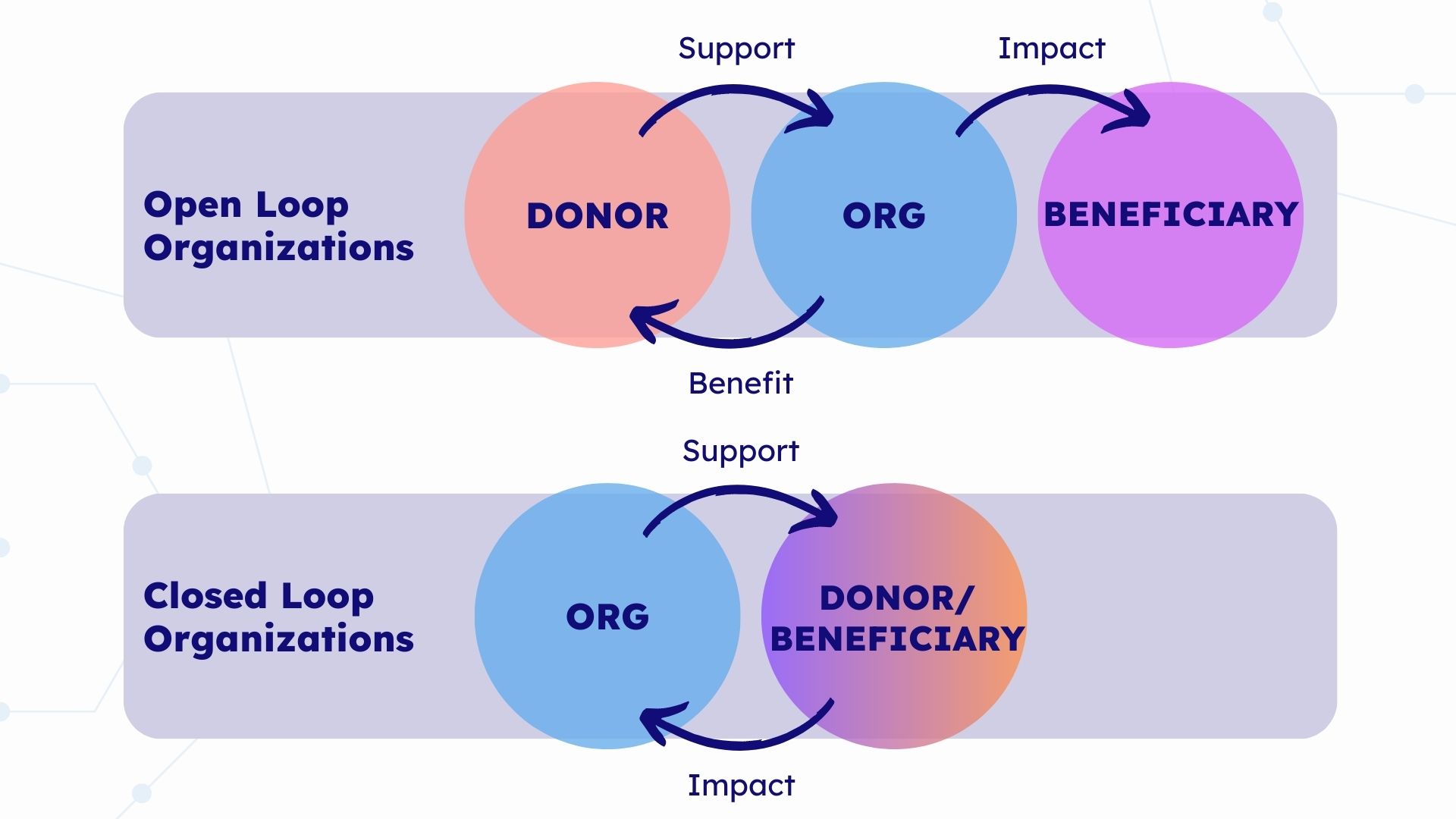
Donors approach giving with different expectations, shaped by the nature of their relationship with your organization. For instance, a donor may give to their alma mater for access to discounted football tickets — a transactional gift. But another donor might give to fund scholarships for students facing challenges they once did — a deeply relational gift. Understanding these differences starts with knowing whether your organization operates in a ‘closed loop’ or ‘open loop’ model, as each influence how donor needs are met.
A “closed loop” organization directly benefits its supporters. For example, when supporters become members at an art museum or buy season tickets to the ballet, they’re supporting a nonprofit. They also receive tangible benefits — discounted admission to the museum, or simply seeing Swan Lake.
An “open loop” organization does not directly benefit its givers. Someone else is the beneficiary of the donation. There’s no tangible result for donating to improve clean water access in developing countries or contributing to relief after a natural disaster.
Both types of organizations will see value from relationship fundraising.
What are You Offering?
Whether you’re an open or closed-loop organization, you have the opportunity to meet your donors’ needs by engaging them in a philanthropic relationship.
Dr. Adrian Sargeant’s research on donor behavior has identified several needs that donors may try to meet by donating to your organization, including:
- Growth
- Self-actualization
- Self-fulfillment
- Reinforcing their identity and affinity for the cause
- A sense of belonging
This is where the traditional distinction between “transactional” vs. “relationship” fundraising starts to break down. Tangible benefits that closed-loop organizations rely on, like free parking at the zoo or first pick of seats for season ticket holders, can also meet these deeper needs. Season ticket holders care about the arts. Zoo members value wildlife conservation. Their participation at your organization can be very personally meaningful, making them more than a donor. They are a “Greenpeace Supporter,” an “ActionAider,” or a “child sponsor.” That’s not a simple transaction, it’s a relationship.
Likewise, open-loop organizations can speak to these deeper needs. Explaining how donors’ support benefits recipients, what kind of change the nonprofit is able to make because of the donation, and how the donors helped goes a long way towards meeting the needs for belonging, self-fulfillment, and self-actualization.
Open or Closed, Relationships are Key
Relationship fundraising is about long-term connections, and building that kind of connection can be challenging.
For closed loop organizations, the challenge is connecting supporters with the cause beyond the immediate benefit. What inspires their support, beyond the incentive of free guest pass at the museum?
For open loop organizations, the challenge is more about articulating the intangible benefits they offer.
Consider disaster relief. While not strictly transactional, gifts made in response to a catastrophic event are often one-off, open-loop responses to an acute situation. How do you grow a relationship beyond that one gift?
Or think about your long-time season ticket holders. How can you build deeper relationships that result in planned, mid-level, or even major gifts?
Either way, clear, relationship-building communication is the key to moving beyond a transactional approach. If you can build a donor journey that gives interested supporters opportunities to learn more, go deeper, and connect, you’ll start to have truly mutual donor relationships–they are helping to meet your needs, but you’re also meeting theirs.
The first gift or membership is an invitation to a conversation. In the disaster relief example, your donor journey might look like:
- An enthusiastic thank you
- An update on relief efforts
- A letter inviting them to become a monthly supporter, explaining that while the big media event catastrophes draw many donations, most of your relief efforts are in response to events that never make the news.
- A monthly update on the stories of people helped by your organization, along with a thank you for ongoing support.
Check out the article: A Relationship Fundraising Approach to Memberships
For season ticket holders, your journey might start with a transactional incentive and then transition into a relationship. That might look like:
- Offering a premium incentive, like a t-shirt or tote bag with the orchestra logo, for season ticket holders who make an additional donation when they buy their tickets
- Sending a personalized thank you note, noting their tenure as ticket holders.
- Inviting them to complete a survey about the kinds of repertoire they most enjoy.
- Hosting special receptions for season ticket holders to learn more about the orchestra and its programming.
- Sharing a donor newsletter with impact updates on what their gifts made possible.
- Noting who is the most responsive and creating branches on the donor journey for:
- Monthly giving invitationsMid-level gift cultivation
- Major gift cultivation
In both examples, there will be people who aren’t interested. This is fine. The one-time disaster donor still helped. The people who just want programming in exchange for money are important to the overall financial health of your organization. Their contributions matter. But creating donor journeys will give you the chance to build something with the people who are most interested, one you’ll miss out on if you never move beyond the transaction or speak to their deeper needs.
Tips for Meeting Donors’ Needs
Open loop or closed, you have the opportunity to take a relationship fundraising approach and create long-lasting connections with your supporters by meeting their needs.
To begin engaging with donor needs:
- Survey donors and ask why they care. Asking for their opinions will show that you care about their perspective and foster greater connection. It can also build a sense of identity and “we-ness” with your organization, increasing loyalty and commitment.
- Make your donors feel like a part of a unique or distinctive group. Fostering a sense of group identity can make the connection more meaningful and lasting. Give them an identity beyond “donor,” like “Bookmobile Booster” or “Orchestra Auxiliary.”
- Show how the donor is similar to your organization’s beneficiaries, other donors, and volunteers. Encourage them to participate in activities that allow them to experience shared beliefs and values in action.
- Support the donor’s aspirations. Rather than merely reflecting who a donor is in your communications, show who they could be.
Learn More About Relationship Fundraising
Our new eBook, Embracing Relationship Fundraising: A Path to Sustainable Philanthropy combines comprehensive fundraising research with practical advice to build long-lasting, sustainable relationships with your supporters. Get your copy today!