

In 2023, 47.4 million people lived in food-insecure households, underscoring the continued need for effective fundraising for food banks. The demand for food pantries is expected to rise as inflation and grocery bills increase, putting more pressure on these vital services.
Food insecurity means the household is “uncertain of having or unable to acquire enough food to meet the needs of all its members.” About 18 million U.S. households (13.5%) experienced food insecurity in 2023. This is roughly 5% higher than in 2022, when 17 million or 12.8% of households were food insecure.
With all food prices expected to increase 3.5% this year, food banks will likely feel the strain. Raising money and collecting food donations at a higher level will be critical so your organization can continue meeting this greater need.
Get the support you need to feed your community — work with AGP
Why focus on fundraising for your food bank?
Food prices have increased by 31% since 2019, due to several factors. For one, every aspect of the food system has been impacted by higher production, labor, and fuel costs. Supply chain disruptions due to the COVID-19 pandemic and severe weather have affected livestock and many essential crops.
Some companies raised prices to combat these volatile conditions and maintain their profitability. Now, new tariffs on imported food will likely increase costs more, with one estimate putting prices 2.6% higher in the short term.
Alongside rising prices, funding for food programs has been slashed in recent months. In March, the U.S. Department of Agriculture (USDA) cut two federal programs that provided about $1 billion in funding to schools and food banks. Of that, about $420 million was cut from the Local Food Purchase Assistance Cooperative Agreement. This program enables pantries to buy food directly from local farms and producers.
It’s becoming clear that federal funding may no longer be a reliable source of income. Fundraising for food banks will become more critical, as will finding alternative revenue streams. And while it’s tempting to focus only on how to get money for a food pantry, consider ways to collect food donations, too. You might partner with:
- Local stores and restaurants
- Local farmers
- Individuals in the community
- Local businesses
- Area school or college organizations
What types of donations do food banks need?
Generally, food banks accept both financial donations and food donations. All nonprofits need monetary support, but in-kind gifts are also valuable. Food is the most common, but this can also include shelving or food storage items, technology, and free professional services like graphic design or printing.
When fundraising for food banks, you’ll need to explicitly ask for the type of donation you need in your campaigns. If you need both, clearly explain how supporters can donate each type. For instance, link to an online donation form for monetary gifts.
If you’re collecting food, create a page with clear instructions for potential donors. We recommend establishing a policy or set of guidelines for the in-kind donations you’ll accept. You might specify that you’ll only take unopened food, undented cans, or unexpired items.
What are the best food bank fundraising ideas and strategies?
Fundraising for food banks can start to feel repetitive, especially if you’re fishing from a small pond. To help you freshen things up, we’re sharing five of our best food bank fundraising ideas. These strategies are ideal for pantries of any size — and with any budget.
1. Creative campaigns.
To be successful, food pantries’ fundraising appeals must stand out. Rather than using generic ideas, copy, and images, infuse your theme and mission into each campaign. Your local community doesn’t want to support a food bank; they want to support your food bank.
So, be authentic and have some fun with your campaigns! Here are some things you could organize:
- “Fill the bucket” challenges. In these online, peer-to-peer fundraisers, supporters donate to fill a virtual bucket.
- Canstruction competition. Challenge businesses or schools to build impressive structures with canned goods and then donate them to the food bank. Give prizes to the winners. This could be a virtual challenge or a timed, in-person competition.
- Themed food drives. Host a themed food drive to secure the items you or your constituents need most. For instance, “Meat the Need Monday” could encourage donors to donate meat or protein.
2. Engaging events.
Organize an in-person event to get supporters excited about your cause and to strengthen your relationship with the broader community. Just be sure the event reflects your mission, not what’s trendy.
Philabundance, a food bank serving nine counties in Pennsylvania and New Jersey, often collaborates with Philadelphia’s many sports teams to collect both money and food. Its standout event is “Camp Out for Hunger,” which began in 1998 and collected one ton of food that year.
This event has grown to be the largest single-site food drive in the country. In 2024, it collected 1.6 million pounds of food and raised $1 million in just four days.
Another great food bank fundraising idea is the Empty Bowls project. This grassroots movement can be used to support any local food pantry. It invites artists and craftspeople to make and donate bowls, which are then used to serve a simple meal. Attendees choose a bowl to take home, and it remains empty to remind them of the empty bowls around the world.
Struggling to Fund the Fight Against Hunger? Read our eBook: “Mid-Level Giving: Building Food Bank Stability in Uncertain Times”
3. Leverage digital platforms.
If your food pantry is short on time or resources, consider using a digital platform to raise funds. Digital fundraising is less expensive and often easier to manage than an in-person event, which can have many moving parts.
Through a digital campaign, you’ll expand your reach to different cities, states, or countries. Moreover, you’ll build stronger relationships with your current donors, who will now have another way to connect with your mission. Digital platforms also collect scores of data, which you can use to improve future campaigns.
To launch a virtual fundraiser, you’ll need some basic tools and technology. For instance:
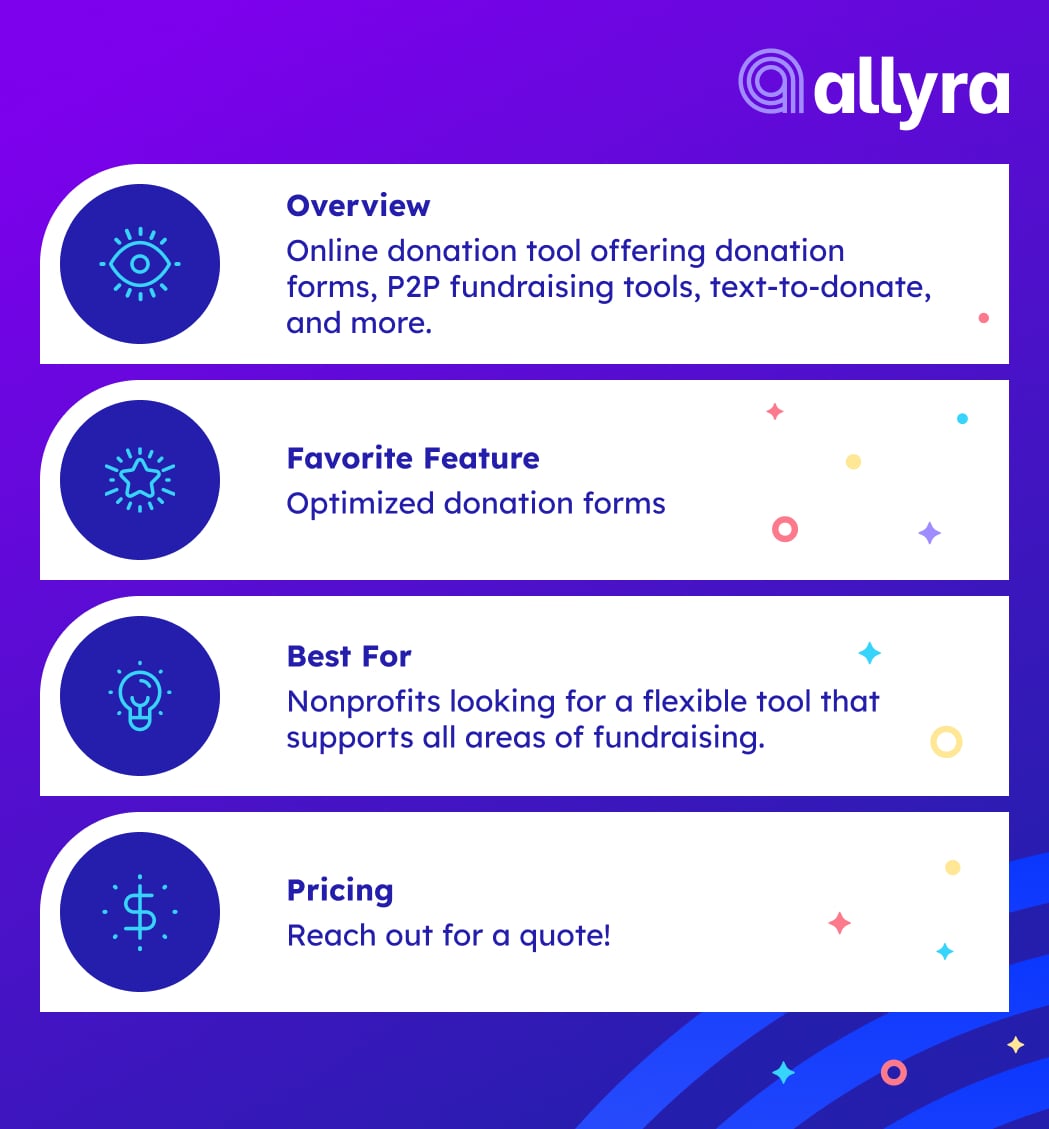
- Fundraising software. A fundraising tool like Allyra enables you to easily create donation forms and text-to-donate campaigns, simplifying online giving.
- A nonprofit CRM. A fundraising CRM makes it easy to manage donors, personalize your communications, and analyze data for better decision-making.
- Optimized donation forms. These forms can be displayed seamlessly on any device, enable direct payment, promote recurring gifts, and prompt automatic receipts.
- Marketing tools. These include email and social media management platforms that let you create consistent, eye-catching messages to keep donors engaged.
Some digital fundraisers, such as exclusive monthly giving clubs, can become a passive source of income, generating revenue in the background. If you start such a program, promote it regularly, and ensure you have a strategy in place to thank donors.
4. Partner with local businesses
Businesses are typically eager to participate in corporate philanthropy, especially for local causes such as feeding the community. Reach out to companies large and small to see if they’d be willing to make a monetary or in-kind contribution.
Here are some ways local businesses could partner with and support you:
- Direct donations to the food bank in exchange for recognition in your promotional materials.
- Host a percentage night where a portion of proceeds from a specific date or timeframe are donated to the food pantry.
- Sponsor an event by donating money, food, or services.
- Host a food drive in their business and work to secure donations from customers.
When you pitch a partnership to a business, be ready to share some of your most compelling impact metrics. Also, tell the company what they’ll receive in exchange for their support. This is usually some type of recognition, so be specific.
5. Collaborate with community institutions.
By pooling your resources with other community organizations, you can expand your mission and reach a larger audience. Consider these potential partnerships:
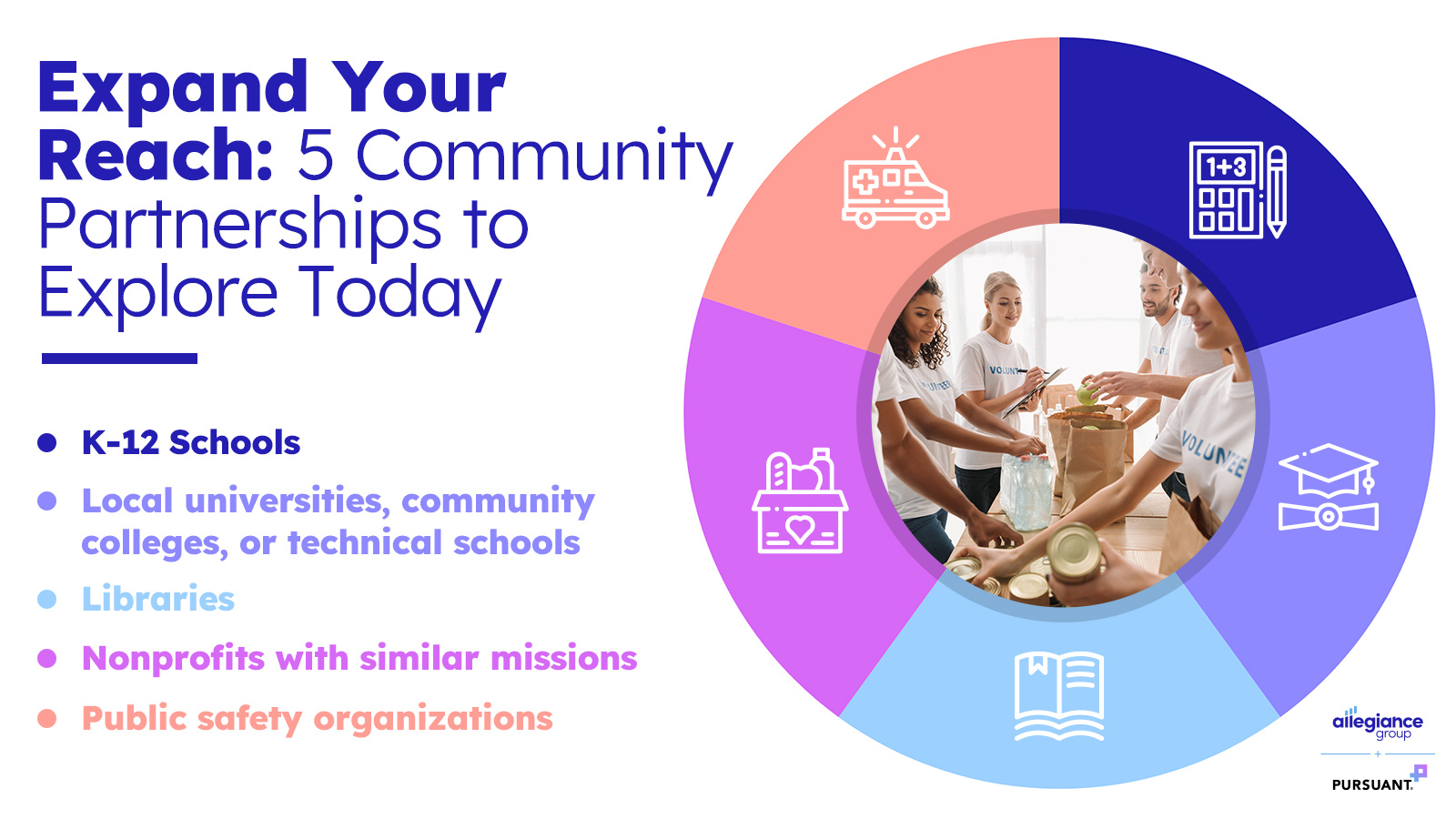
K-12 schools
- Establish a school-based pantry for healthy snacks
- Implement a backpack program to send students home with pre-packaged food for the weekend
- Recover leftover food from school cafeterias to distribute to students
- Encourage classroom competitions to collect food donations
- Have each grade participate in a Canstruction competition
- Let student clubs earn volunteer hours by staffing your pantry
Local universities, community colleges, or technical schools
- Establish an on-campus food pantry
- Train faculty and staff to recognize and screen students for food insecurity
- Place donation bins in high-traffic areas on campus
- Have college departments or student clubs sponsor a shelf in the pantry
- Host a college-wide Canstruction competition at a sports event
Libraries
- Reduce overdue book fines in exchange for a food donation
- Host summer meal programs for children
- Offer kids’ or family cooking classes
- Serve as a food bank distribution site
- Teach people how to prepare healthy, low-cost meals
- Invite multiple local organizations and host a community resources fair
Nonprofits with similar missions
- Source leftover produce from a community-run garden
- Ask service organizations to volunteer their time at your pantry
- Invite local social clubs to participate in a Canstruction competition
- Provide educational programming through healthcare providers
- Advocate for policies that address the causes of food insecurity
Public safety organizations
- Identify people in need of food assistance
- Ensure safe food distribution, especially in times of emergency
- Have different police and fire stations compete in a food drive
- Provide food and other resources to those experiencing homelessness
Get weekly fundraising tips straight to your inbox
How can you raise more for your food pantry?
Economic uncertainty and government spending cuts mean fundraising for food banks will be more crucial than ever. To ensure you can meet your community’s needs, consider working with a team of professionals like Allegiance Group + Pursuant.
Our digital marketing and direct mail specialists will help you reach more donors and prospects with consistent and compelling messaging across channels. Personalized appeals are delivered to the right people at the right time so you can raise more money to support your cause.
Digital marketing services include:
- Strategy and planning
- Copywriting, design, and development
- Integrated media solutions
- Analytics and insights
- Email campaigns and automation
- SMS and mobile marketing
Direct mail offerings include:
- Direct mail campaign management
- Copywriting, design, and development
- Printing and mailing
- Testing and optimization
- Acquisition list planning
- Mid-level and upgrade programs
- Direct mail fundraising enhancements
Case Study: Georgia Mountain Food Bank
The Georgia Mountain Food Bank (GMFB) serves a five-county region in north Georgia, connecting about 570,000 people with healthy food each year. Our Allegiance Group + Pursuant team has partnered with them on both paid search and direct mail campaigns with outstanding results.
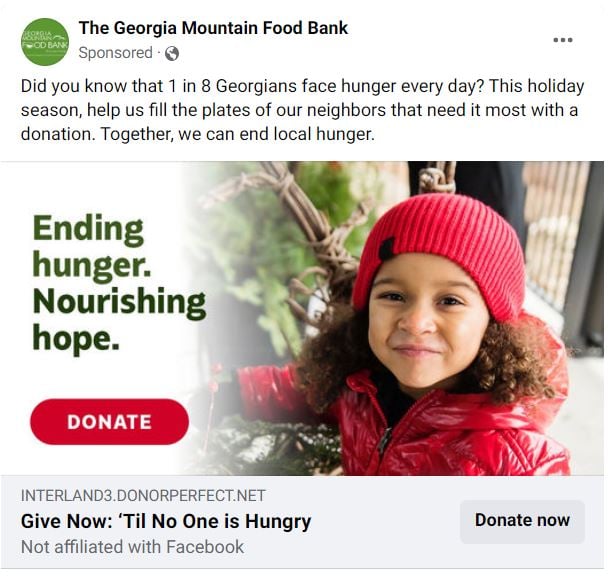
GMFB sought to expand its digital reach and connect with supporters through a direct-to-donor advertising campaign. We developed a two-month effort that included paid search ads through Google and Microsoft and display ads on Facebook and Instagram. This resulted in:
- 200% return on ad spend (ROAS)
- 142 total gifts
- $257+ average gift size
- $36,592 raised in two months
The direct mail campaign aimed to distinguish GMFB’s brand and mission from similar nonprofits in the area. And while it partners with the Atlanta Community Food Bank, GMFB wanted to highlight its distinct programs and services. Results included:
- 61% increase in the number of gifts
- 104% increase in gift amount
- 27% increase in average gift size
Wrapping Up
Fundraising for food banks helps address a critical need in our communities that will only continue to grow. These nonprofit leaders must think beyond how to get money for a food pantry, instead deploying creative campaigns and in-person events that encourage all kinds of donations.
Additionally, seek opportunities to collaborate with businesses, educational institutions, and other nonprofits to broaden the reach of your mission. Strong partnerships will help your entire community thrive.
For more food bank fundraising ideas and strategies, contact us at Allegiance Group + Pursuant. Our digital and direct mail fundraising experts are eager to support your vital efforts to address food insecurity. Let’s connect.
Related reading:
- Read our eBook: Mid-Level Giving: Building Food Bank Stability in Uncertain Times
- 10 of the Most Effective Fundraising Tools You Need to Try
- Explore Multichannel Fundraising Advice from the Experts
- Unlock the Secrets of Digital Marketing for Nonprofits