
The Pan-Mass Challenge is a bike-a-thon that raises more money for charity than any other single athletic fundraising event in the country. Held in Massachusetts the first weekend in August, the PMC raises funds for Dana-Farber Cancer Institute, which provides adult and pediatric cancer treatment and research.
The first Challenge in 1980 had just 32 riders and 10 volunteers, raising $10,200 in honor of founder Billy Starr’s mother, who died of cancer. Over time, it has grown to 6,800 riders and 3,500 volunteers, raising a total of $1.047 billion.
Healthcare fundraisers like this one drive much-needed funding to healthcare institutions that provide critical services to their communities.
Table of contents:
- Healthcare fundraising basics
- Effective healthcare fundraising strategies
- Tools and services for healthcare fundraising
In this blog, we’ll outline what healthcare fundraising is and why it’s important, as well as addressing some of the unique fundraising challenges healthcare institutions face and the types of effective fundraising strategies to put into place.
Want to see how our marketing & fundraising team can revolutionize your campaigns?
Foundational Knowledge: Healthcare Fundraising Basics
What is healthcare fundraising?
Healthcare fundraising is building relationships and securing donations to support various aspects of healthcare, including patient care, research, technology upgrades, and facility improvements. The types of organizations that conduct fundraising include nonprofit hospitals, clinics, medical research and educational institutions, and healthcare foundations.
Why do healthcare institutions need to fundraise?
Healthcare institutions fundraise because while patient payments and insurance cover a significant portion of their expenses, they often fall short of covering all costs, including enhancing and expanding patient care, addressing staffing shortages and burnout, paying for equipment upgrades, and providing financial assistance to patients.
Additionally, these institutions still have slim operating margins that haven’t returned to pre-COVID numbers. There is a desire for individuals to support healthcare – in fact GivingUSA reported that donations to healthcare organizations grew by nearly 9 percent in 2023.
What does healthcare fundraising look like in practice?
Healthcare institutions have a variety of revenue streams, such as payments for procedures/treatments, government and private grants, individual donations and major gifts, in-kind donations (e.g., equipment), and more.
Healthcare organizations rely on these various sources of funding, so they should engage in a variety of different fundraising activities:
- Standard annual fund campaigns targeting smaller, individual donors
- Fundraising events such as a road race or bike-a-thon
- Planned giving initiatives where donors designate gifts through their estate or via bequests or other deferred gifts
- Major gifts prospecting and the ongoing stewardship of those relationships
- Grateful patient programs involve developing relationships with patients and those close to them who have benefited positively from the organization’s providers and services.
- Capital campaigns to add a new wing or for another major project
What are some unique fundraising challenges healthcare organizations face?
Healthcare institutions face different challenges than traditional nonprofits when it comes to raising funds. They conduct different types of fundraising activities (ex. Grateful Patient programs), target audiences have personal connections to the organization – sometimes developed over years involving individuals and their families, and there is an emphasis on building long-term relationships with supporters.
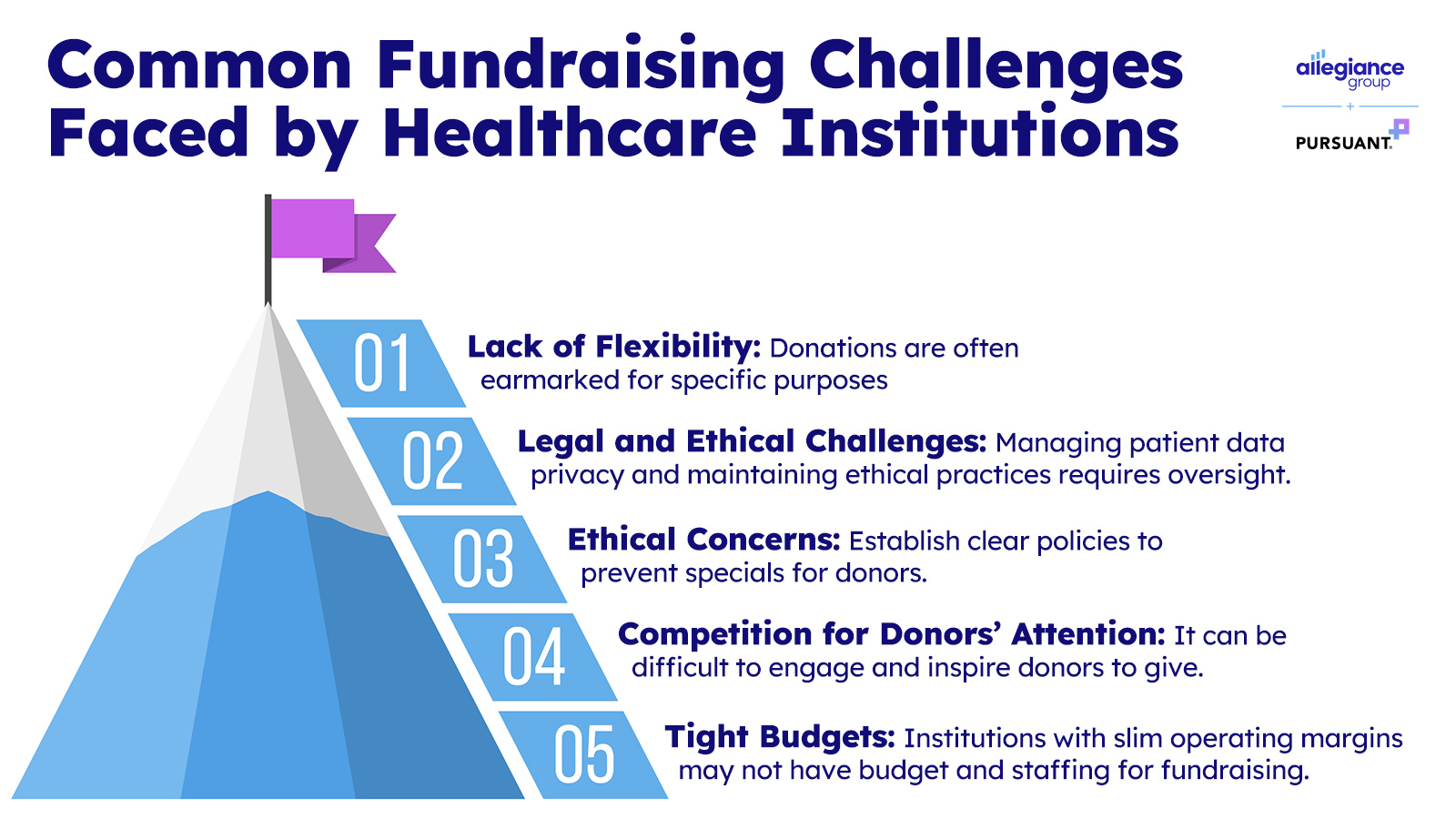
Common fundraising challenges faced by healthcare institutions:
- Lack of flexibility as donations are often earmarked for specific purposes
- Legal and ethical challenges involving the complexities of managing patient data privacy and maintaining ethical practices; addressing this requires more oversight
- Ethical concerns as donors may come to expect preferential treatment after giving, leading to inequities. To combat this, establish clear policies for donors
- Competition for donors’ attention is real, and the philanthropic landscape is crowded. It can be difficult to engage donors and inspire them to give
- Tight budgets for institutions dealing with already slim operating margins. It may be difficult to allocate the proper budget and staffing toward fundraising
8 Effective Healthcare Fundraising Strategies
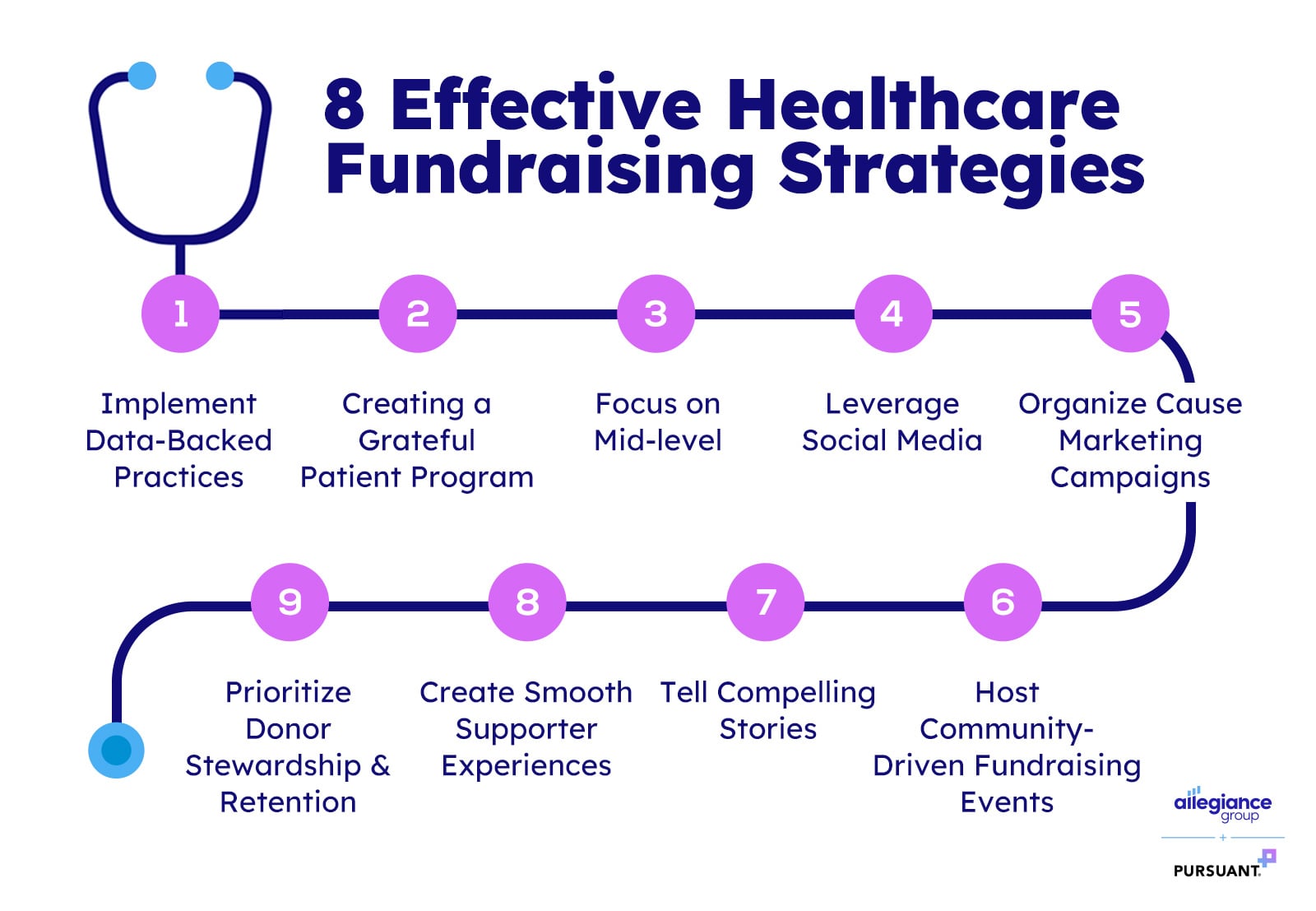
1. Implement Data-Backed Practices
Data-backed practices are supported by making use of your own donor and giving information and statistics. For example, review previous campaigns to see if a particular fundraising strategy or message caused a spike in donations and how you can make use of this in a future campaign.
Putting it into practice:
- Ensure you have the right tools in place
- Properly attribute conversions to the specific channel where they were sourced
- Always consider date privacy and security as well as any regulatory compliance issues
- Identify (and celebrate!) success and failures, then adjust accordingly
2. Creating a Grateful Patient Program
A Grateful Patient program allows patients and those close to them to show their gratitude towards the doctors, nurses, and other caregivers in the form of donations, advocacy or volunteering.
Some suggestions for a successful Grateful Patient program:
- Allocate specific staff members to oversee the program. Remember, these interactions can be complex and deeply personal, so you need to choose program staff carefully
- Create solicitation policies and ensure they align on how to approach prospects while avoiding pushiness
- Focus on making outreach personal
In addition to deepening connections with patients and their families, a well-run Grateful Patient program also helps identify and engage individuals who may become future major gift supporters.
3. Focusing on Mid-level
Mid-level donors are often overlooked, yet they represent one of the most loyal and high-potential segments in any healthcare fundraising program. With an average 65% multi-year retention rate, these donors not only provide sustainable revenue but may also be future candidates for major gifts or legacy giving.
Strategies for building a thriving mid-level program:
- Create a distinct mid-level donor tier with its own stewardship and recognition plan
- Use data to identify mid-level donors with capacity and affinity for deeper engagement
- Personalize outreach—letters, calls, or in-person interactions—to foster stronger connections
- Provide behind-the-scenes access or mission-driven experiences to deepen their investment
- Test messaging and offers that reinforce their unique impact within your organization
While annual and major giving often get the spotlight, a well-cultivated mid-level program can fuel long-term growth, balance your fundraising portfolio, and build a more resilient donor community. For more, explore the Mid-Level Accelerator or our guide on Cultivating Stronger Communities: Nurturing a Thriving Mid-Level Giving Program in Nonprofit Healthcare Organizations.
Discover how mid-level giving can help your foundation do more with less. Read our eBook: Healthcare Funding Stability in Uncertain Times
4. Leverage Social Media
Social media is another way to engage with donors and supporters, while expanding the healthcare organization’s reach and message frequency.
Social media campaigns require a few considerations:
- Choose platforms that your supporters (and their demographics) already engage with
- Establish an approval process for social media posts to ensure consistent branding and messaging – and to avoid any legal or ethical missteps
- Consider partnership with peer organizations or influencers who are relevant to your mission or have personal connection to your institution
5. Organize Cause Marketing Campaigns
Cause marketing campaigns involve partnering with a for-profit organization to raise money for the healthcare organization’s cause. Typically, both organizations market the campaign. For example, a cancer research center might partner with a local clothing store to create custom shirts with the proceeds going to the healthcare organization.
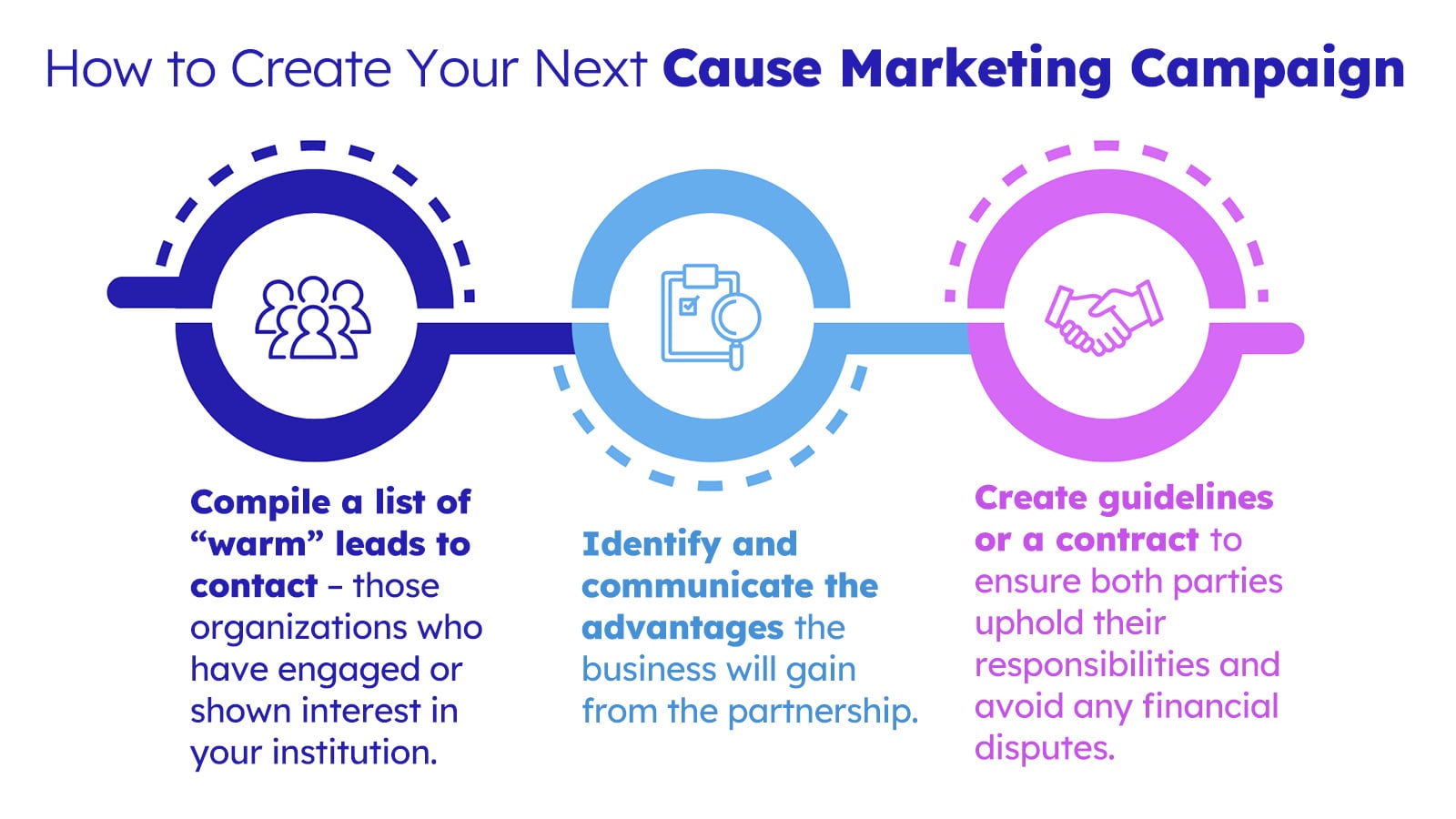
Components to include when creating a cause marketing campaign:
- Compile a list of “warm” leads to contact – those organizations who have engaged or shown interest in your institution
- Identify and communicate the advantages the business will gain from the partnership.
- Create guidelines or a contract to ensure both parties uphold their responsibilities and avoid any financial disputes.
6. Host Community-Driven Fundraising Events
Community-driven fundraising events a focus on engaging and involving the local community in the fundraising process and fostering a sense of shared purpose – like the Pan-Mass Challenge or the American Heart Association’s annual Heart Walk in communities across the country. On a local level, a community health center found success hosting an annual rock concert featuring its own physicians.
What to consider when creating a community-driving fundraiser:
- Understand the community’s preferences and research past successful events. What works for one healthcare organization may not work as well for another.
- Promote in advance, across all channels – with a comprehensive marketing communication plan in place
- Consider offering incentives for participating
7. Tell Compelling Stories
Storytelling is a cornerstone of fundraising and can be used effectively by healthcare organizations to reach donors and would-be supporters. An impact story uses anecdotes (ex. a patient’s health journey) and data (ex. successful program statics) showing to show changes from programs and services, helping donors understand the organization’s effects.
What makes a compelling story? It’s one that creates an emotional connection with the reader, and it can inspire action or drive change. Showcase the role of donors and their support in these stories and make the benefits of giving tangible by highlighting impact metrics.
Additionally, keep your organization’s ethical and legal guidelines in mind, so you may want to consult a lawyer prior to publication to ensure informed consent and regulatory compliance.
8. Create Smooth Supporter Experiences
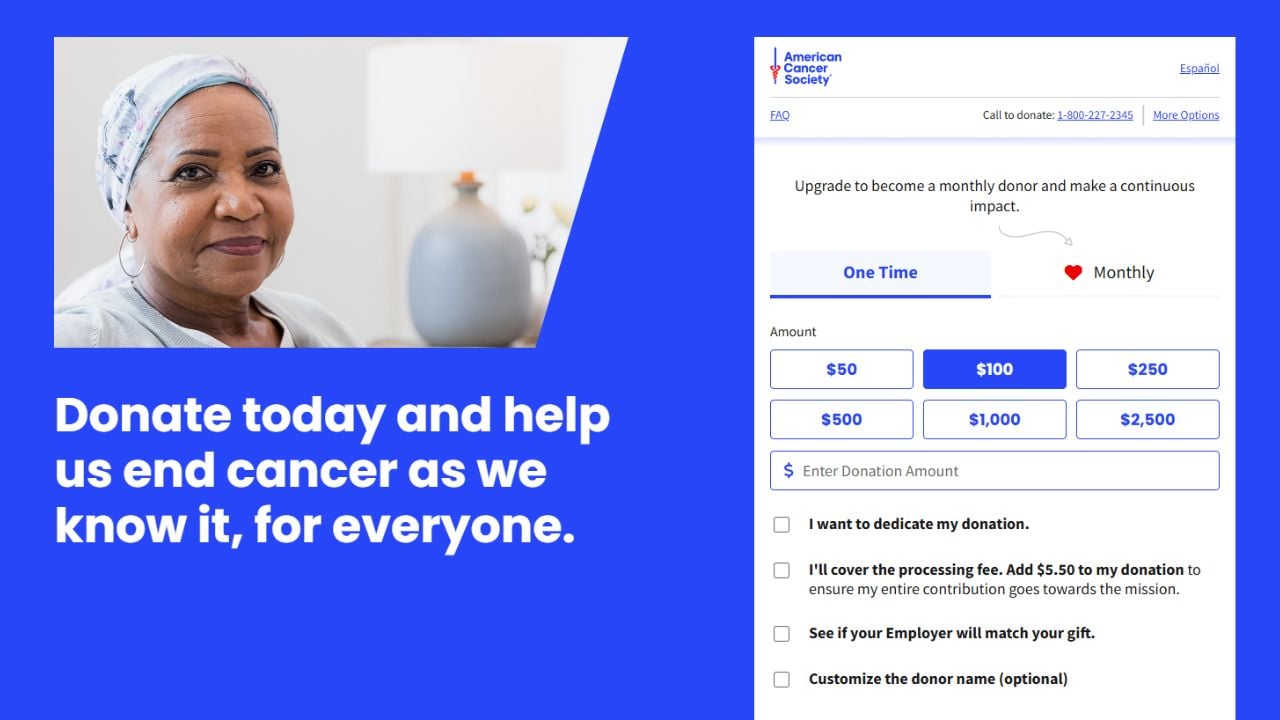
There should be as little friction as possible involved in a donor’s giving experience. Too many steps or complicated instructions could cause them to abandon the process altogether.
Some things to consider when creating an uncomplicated donor experience:
- Streamline the donation form and avoid asking unnecessary questions
- Ensure all fundraiser-communication has clear calls to action linking to the donation form
- Accept a variety of payment methods, such as one-time or recurring donations, bequests or deferred giving, donor-advised funds, or even crypto currency
9. Prioritize Donor Stewardship & Retention
Strong donor relationships and high retention rates saves time and money. Thoughtful, intentional stewardship of current donors is less expensive and time consuming than acquiring new donors. It also enhances your organization’s reputation, increases the chance that loyal donors will upgrade, and strengthens their network – a happy donor is more likely to recommend the organization to a friend.
A few suggestions to support your donors:
- Personalize communications as much as possible through donors’ preferred channels
- Show gratitude soon after gifts, using donor-centric language and highlighting their impact
- Ask for and implement feedback (when possible)
- Get leadership involved – engaged leadership enhances fundraiser performance, setting the tone for external donors/creating a culture of giving within the organization
How to Enhance Your Hospital Foundation Fundraising Strategy
Essential Tools and Services for Healthcare Fundraising
Robust, secure constituent relationship management (CRM) system
- A CRM is software that helps manage and track interactions with donors, volunteers, and other stakeholders, enabling you to build stronger relationships and improve fundraising efforts.
Donor data analytics tools
- Often part of CRMs or donor management software, these tools analyze donor information to help you understand giving patterns, identify trends, and improve fundraising strategies. You can use these tools to identify mid-level and major donor prospects, learn more about existing donors, segment donors, personalize communications and make predictions about future donor behaviors.
Fundraising software
- This software is designed to help manage and optimize fundraising by enabling secure donation collections (payment processing), managing donor relationships, automating tasks like receptions and thank you messages, and tracking campaign performance. Allyra, for example, has optimized fundraising tools, including mobile giving forms, text to donate, and peer-to-peer pages to help you raise funds online.
A marketing and fundraising partner
- AGP can do the heavy lifting and execute your healthcare fundraising campaign strategy on your behalf using Allyra as the toolset. We can also give expert advice on copy, creative, and design that fits your organization’s branding.
Healthcare organizations should also consider the other professionals services they may need to effective successful fundraising such as legal services and an internal development team, which may require adding new staff or restructuring existing roles or departments.
Additional Resources
Healthcare fundraising is critical for filling financial gaps so organizations can improve patient care, upgrade equipment, bolster staff, or expand their facility. Through effective fundraising strategies, healthcare organizations can better serve their communities, meet urgent needs, and reach their biggest goals.
AGP understands the unique needs of healthcare organizations, and with our extensive experience in healthcare marketing, fundraising, and the latest technology, we will bring our deep knowledge and connections to empower your success.
Resources:
- Read the eBook: The Urgent Case for Mid-Level Giving in 2025: Healthcare Funding Stability in Uncertain Times
- Grow your impact with omni-channel marketing
- How to get donations for your cause
- How to foster loyal support with a mid-level giving program