
Hospital foundation fundraising is a critical component in enhancing more traditional revenue sources and can address healthcare needs, such as research, capital projects, and programs, which aren’t covered by government resources or insurance.
The good news is that growth in the healthcare industry means there are opportunities for hospital foundations to expand their fundraising campaigns and maximize their revenue. Online revenue is stable, and the average online gift has more than doubled versus the prior year – from $178 to $373 in 2024.
In this article, we’ll explore the importance of hospital foundations and how they can create an effective healthcare fundraising plan by enhancing their strategies and implementing new tactics.
Partner with AGP to develop effective healthcare fundraising strategies
How do hospital foundations work?
Hospital foundations are tax-exempt 501(c)(3) organizations affiliated with a hospital. Like other nonprofits, they have boards, bylaws, etc., and there is often overlap between the hospital and foundation boards. These foundations exist to offset the financial challenges and ever-tightening margins hospitals face. For example, hospital CEOs ranked financial challenges second on the list of their top concerns.
Operating independently, hospital foundations have a mission to supplement the hospital’s revenue by engaging with donors – as individuals, corporations, community organizations – to secure contributions. Hospital foundations often work closely with hospital leaders to identify priorities and opportunities, and funding supports initiatives like upgrading medical technology, enhancing training, supporting patient care, and more.
Common Fundraising Challenges for Hospital Foundations
Hospital foundations may experience these common challenges when it comes to fundraising:
- Complying with regulations: They must ensure all fundraising initiatives comply with patient privacy regulations like HIPAA.
- Data management and security: Stringent security measures are necessary (due to legislation like HIPAA), making it more important than ever that these foundations have secure, integrated data management systems.
- Donor engagement and retention: Building relationships with donors is critical, but fundraisers must remain sensitive to their current situations (e.g., they may have experienced a life-altering injury or diagnosis) and work to establish trust. Donors may also experience donor fatigue if they feel their support isn’t having a meaningful impact.
- Limited resources: This depends on the size of the foundation, but they may struggle to build and maintain those complex donor relationships if short-staffed/underfunded.
Understaffed foundations may want to consider working with an organization like AGP to maximize their fundraising success.
Why develop a healthcare fundraising strategy?
A well-defined fundraising strategy is a detailed plan that will guide a specific campaign. Here are the key reasons mission-driven organizations create and use them:
- Ensures campaigns align with organizational goals. Agree on these goals with stakeholders, then plan the campaign around them
- Optimizes resource allocation. They guarantee resources are allocated toward priority areas that will earn high returns.
- Enhances donor experiences. Plan how to engage and retain donors ahead of time, crafting effective communication cadences, aligning with their preferences, etc.
- Allows organizations to measure success. Set measurable goals, then determine which metrics will help them track progress/determine success
Within the broader campaign strategy, foundations should plan individual initiatives, such as a donor stewardship strategy and outreach events.
An Overview of Healthcare Fundraising & 8 Effective Tactics
How can your hospital foundation create an effective fundraising strategy?
These are the essential components recommended for your healthcare fundraising strategy:
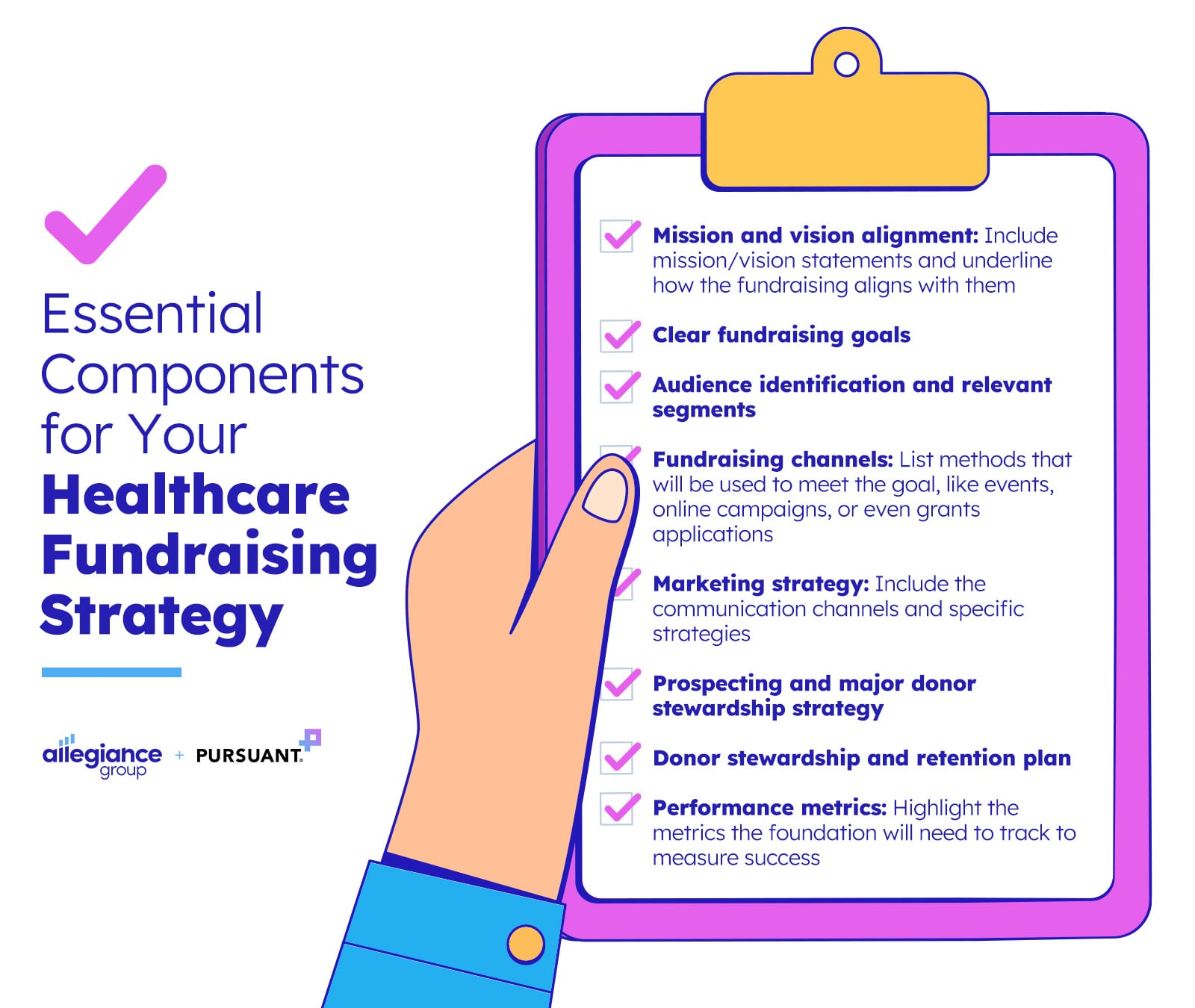
- Mission and vision alignment: Include mission/vision statements and underline how the fundraising aligns with them
- Clear fundraising goals
- Audience identification and relevant segments
- Fundraising channels. List methods that will be used to meet the goal, like events, online campaigns, or even grant applications
- Marketing strategy. Include the communication channels and specific strategies
- Donor stewardship and retention plan
- Performance metrics. Highlight the metrics the foundation will need to track to measure success
- Prospecting and major donor stewardship strategy
Using this framework, you will learn the steps your healthcare foundation should follow to craft its fundraising strategy.
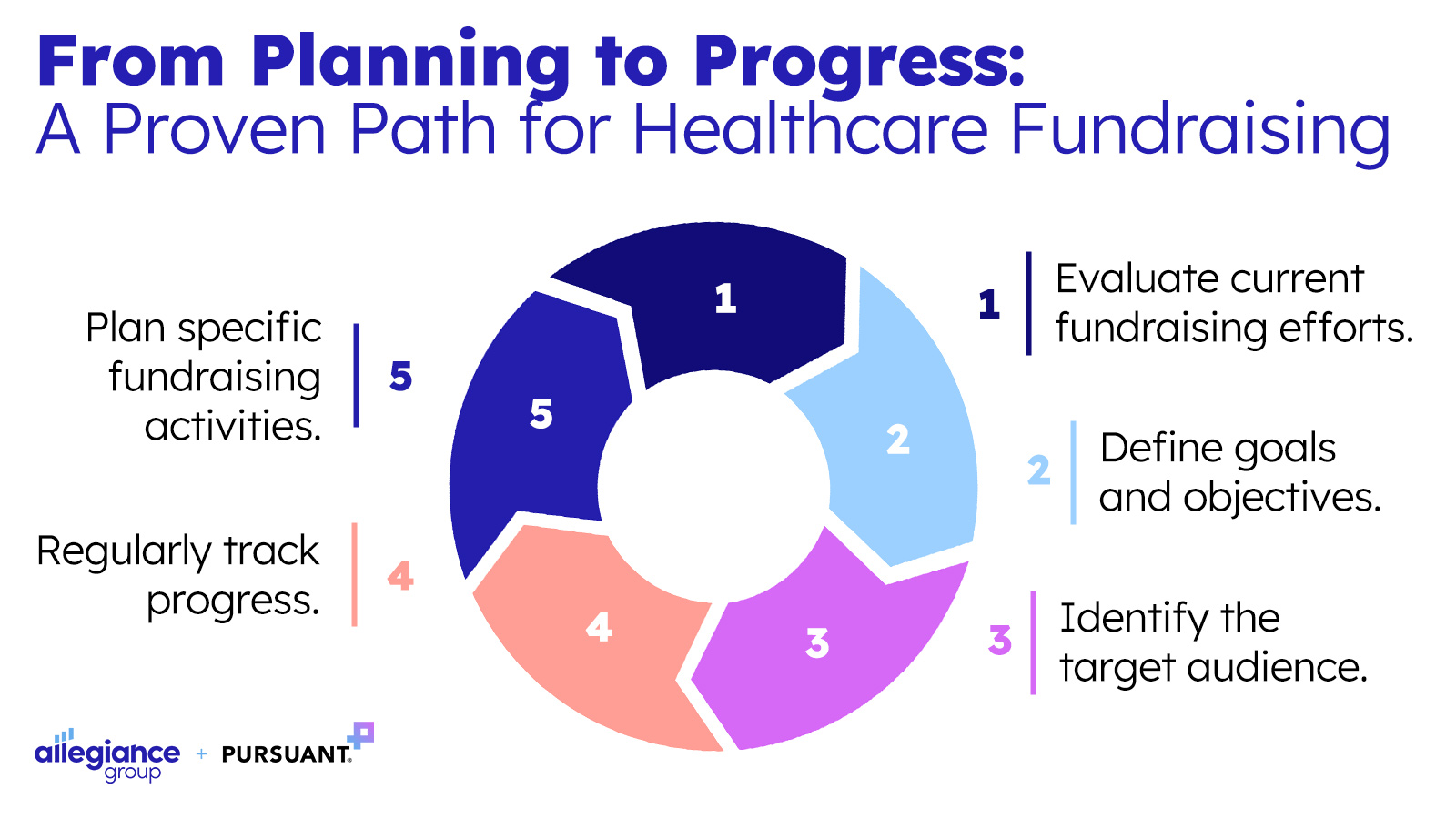
1. Evaluate current fundraising efforts.
To get started, review current fundraising activities and key metrics, such as donor retention rates, engagement levels, and average donation amount. Use this data to then identify and build on your strengths while pinpointing areas that need improvement.
2. Define goals and objectives.
There is a difference in the overarching goal of a campaign – which should be broad and long-term – while the objectives are the specific steps that are needed to achieve that goal. The goal may be to raise $25 million for a capital campaign, and the objectives are what will be done to raise that amount.
The SMART framework is recommended for drafting your goals. SMART stands for specific, measurable, achievable, relevant, and time-bound – parameters that eliminate guesswork, set a timeline, and make it easier to track progress and results. Collaborate with hospital leadership to make sure the goals align with the hospital’s needs and priorities.
- Specific: Outline what needs to be accomplished and who will do it?
- Measurable: Define the metrics you are using. These can be quantitative (money raised, donor engagement) and qualitative (patient testimonials, surveys).
- Achievable: Goals should be realistic, not aspirational.
- Relevant: Is what you’re doing in alignment with broader business goals?
- Time-Bound: A timeline of when tasks should be started and finished
3. Identify the target audience.
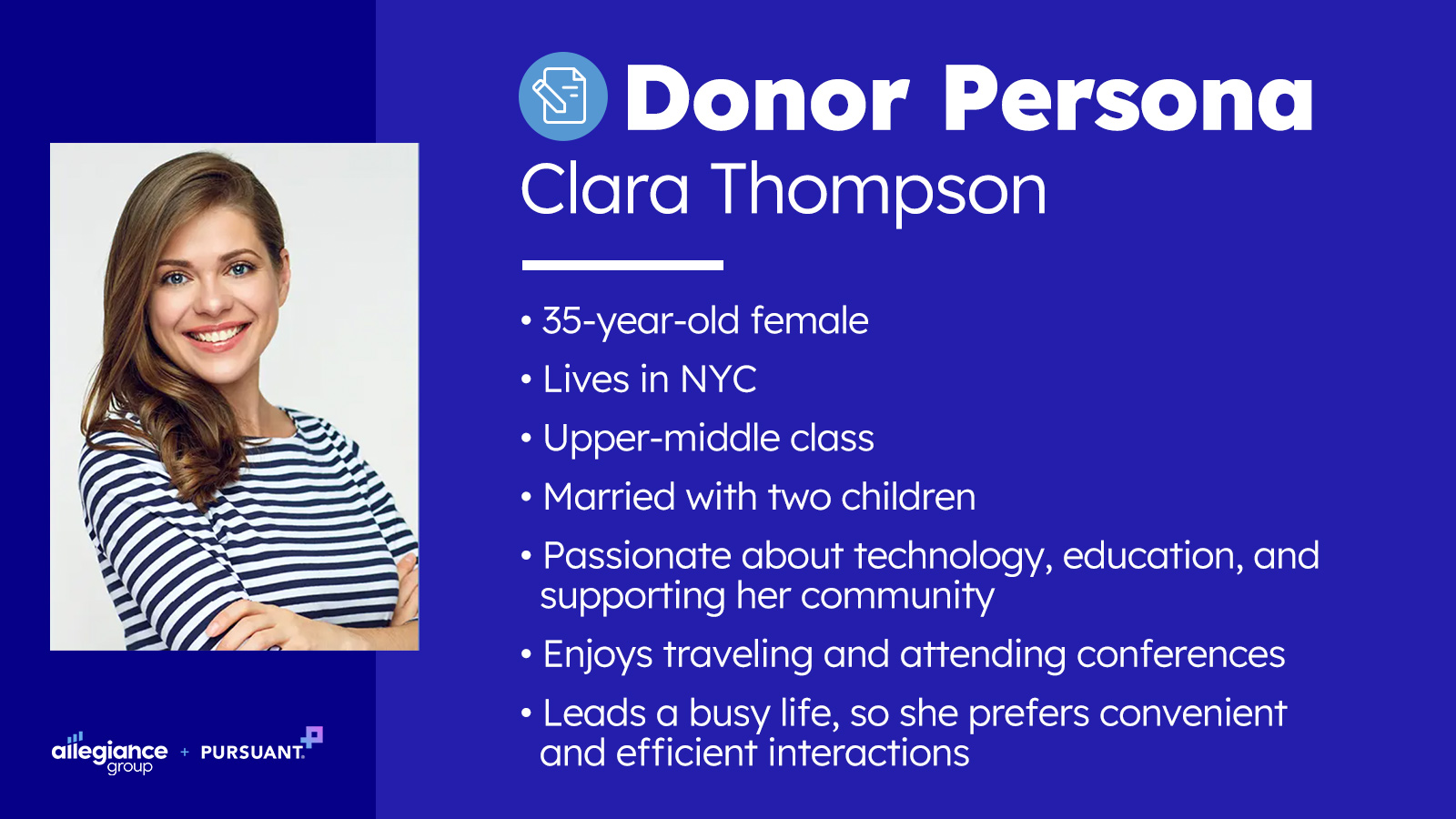
Your target audience is those individuals and organizations most likely to support your cause. Knowing demographics, engagement, and interests can help you create an audience persona – a representation of a typical member of this audience.
Hospital foundations may need to target more than one audience and should always segment donors to craft personalized communications.
You might segment them by:
- Giving history and behaviors
- Giving capacity
- Interests and affinities
- Relationship to the hospital
The foundation should then detail how they will appeal to and engage each segment. For those individuals who have previously made signification donations, you may share a story about patients whose lives have been touched by their contributions.
4. Plan specific fundraising activities.
Now it’s time to detail the actual fundraising activities the foundation will conduct during the campaign. These tactics should align with the hospital’s mission and suit the specific needs and preferences of each audience segment.
Here are some activities to consider:
- Events
- Digital campaigns
- Direct solicitations (from individual donors at all levels)
- Corporate partnerships
- Community outreach initiatives
Discover how mid-level giving can help your foundation do more with less. Read our eBook: Healthcare Funding Stability in Uncertain Times
5. Regularly track progress.
Another part of the plan is to establish a schedule for tracking the campaign’s progress. Set milestones that must be reached by specific dates to achieve the goal. If those milestones aren’t met, it’s time to adjust the strategy.
Key metrics can include the total amount raised, number of donations, average gift amount, and donor retention rate. You can also look at donor sentiment and message resonance.
You may want to consider a combination of tools and metrics to track progress:
- CRM (Constituent Relationship Management) System: Track donor information, giving, history, and engagement
- Data Visualization: Turn your raw data into dashboards, trends, charts or reports
- Fundraising Platforms: These systems track analytics and often integrate with CRMs
- Email Marketing and Engagement: Track open rates, engagement, and donation conversion
- Website and Social Media Analytics: Track donor behavior and campaign performance
As mentioned earlier, it is helpful to have the data from these digital tools as well as feedback from your supporters to improve future fundraising and stewardship efforts.
Wrapping Up
Hospital foundation fundraising plays a vital role in bridging the gap between traditional healthcare funding and the growing needs of patients and communities. With a strong plan in place, hospital foundations are well-positioned to support innovative research, critical programs, and essential capital projects that make a lasting impact.
Contact Allegiance Group + Pursuant for help in crafting your fundraising strategy. For more fundraising tools, check out these resources:
Read the eBook: The Urgent Case for Mid-Level Giving in 2025: Healthcare Funding Stability in Uncertain Times
How to Get Donations for Your Cause: 10 Best Practices
7 of the Most Effective Fundraising Tools You Need to Try
How to Grow Your Impact with Nonprofit Omni-channel Marketing