
Today’s fundraising landscape—like the world as a whole—is becoming increasingly digital. According to Nonprofit Tech for Good, 91% of nonprofits have a website, 67% engage in email marketing, and 87% use at least one social media platform as of 2023.
If your organization is in this majority, you likely know the value of these channels for marketing your mission and sharing opportunities to get involved. But are you fully realizing their revenue generation potential through a robust digital fundraising strategy?
Whether you’re just getting started with digital fundraising or want to improve your existing efforts, you’ve come to the right place! In this guide, we’ll cover everything you need to know about digital fundraising, including:
- What is digital fundraising?
- Why should my nonprofit raise funds online?
- Essential Elements of a Successful Digital Fundraiser
- Pro Tips to Transform Your Digital Fundraising Campaigns
Let’s get started by reviewing the basics of digital fundraising and its benefits to nonprofits like yours.
Partner with AGP to jumpstart your nonprofit’s digital fundraising efforts.
What is digital fundraising?
Digital fundraising is the process of raising money for a charitable organization or cause using online methods. Digital fundraisers can be hosted on your nonprofit’s website, via a third-party platform like email or social media, or through a combination of the two (like a text-to-give campaign that prompts users to donate on your website).
While there is some overlap in channels and content between digital marketing and fundraising, the latter specifically refers to online efforts to generate revenue, not just to spread the word about your nonprofit or help people get involved in non-monetary activities like volunteering or advocacy.
Why should my nonprofit raise funds online?
Digital fundraising benefits both the organizations that run online campaigns and the supporters participating in them. Here are just a few of the advantages your nonprofit can experience:
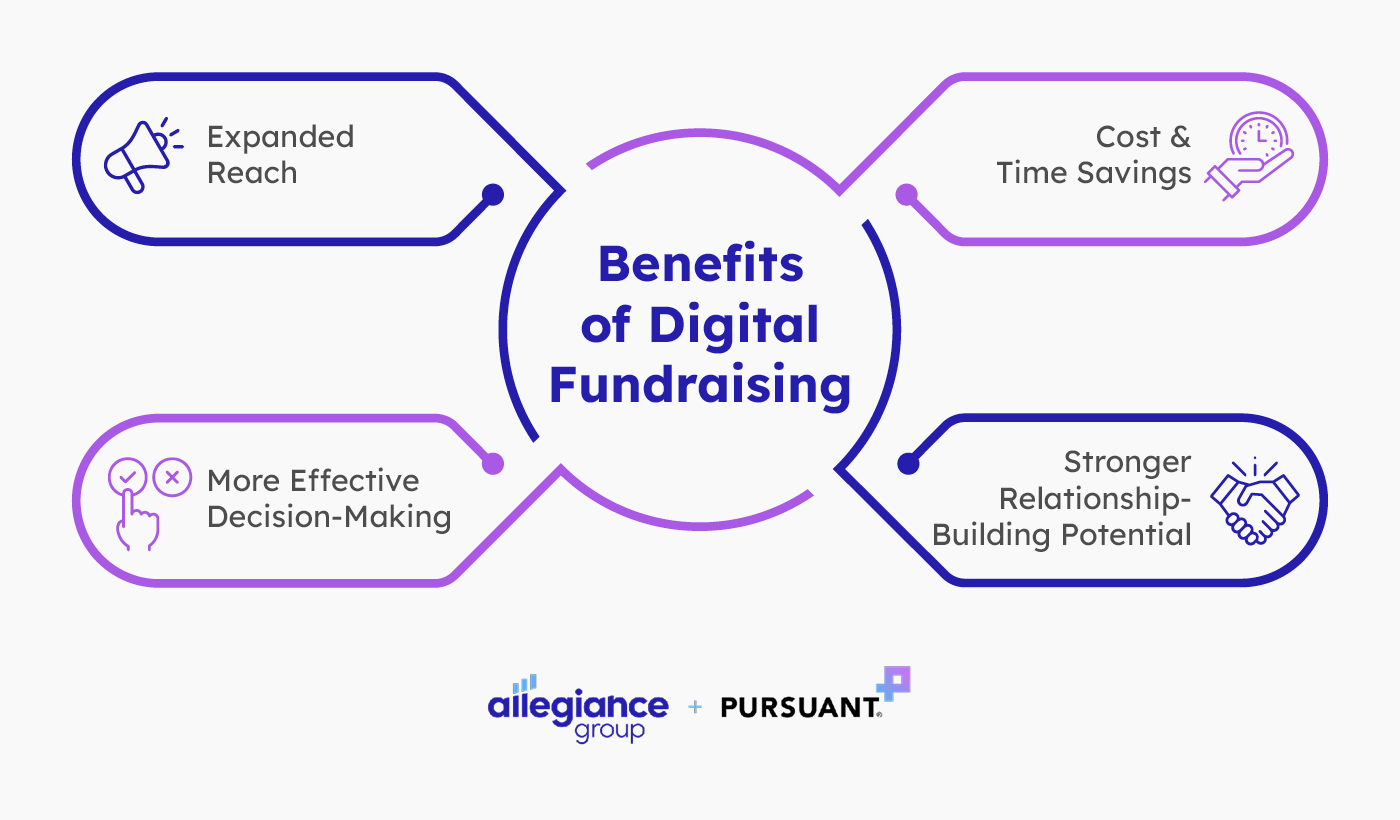
- Expanded reach. The internet makes it easy to engage not only your nonprofit’s local community but also collect contributions from supporters who live in different cities, states, or even countries. Donors may also share your campaign with their networks to widen its audience without your nonprofit having to expend additional effort or resources.
- Cost and time savings. Although you may need to invest in specialized fundraising tools upfront to run digital campaigns, online fundraising tends to be less expensive over time since you don’t need physical resources like event venues or printed materials. Plus, you can consolidate and automate mundane campaign tasks with your software to give your team more time to focus on strategy and donor engagement.
- More effective decision-making. It’s also easier to collect data on digital fundraising efforts. Then, your team can analyze that information, see what is working and where there is room for improvement in your strategy, and make better-informed decisions about future campaigns.
- Stronger relationship-building ptrotential. By adding digital fundraising to your outreach mix, you’ll give supporters an additional touchpoint to connect with your mission and messaging. Plus, you can more effectively target messages to different audience segments, personalizing their experiences with your organization and making them more likely to contribute. Once you’ve run several digital fundraisers and consolidated data on repeat supporters, you can retain their support more effectively.
For supporters, the main benefit of online fundraising is convenience. They can contribute to your nonprofit from their computers or mobile devices, choose from various payment options, easily get their friends and family involved with causes they care about, and even participate in virtual events from the comfort of their homes. And when it’s easy for donors to give, they’re more likely to do so!
Essential Elements of a Successful Digital Fundraiser
There are countless types of digital fundraisers in the nonprofit sector, and each one will require slightly different preparation from your organization to succeed. However, you’ll definitely need a few common essentials to get started, regardless of whether you’re hosting a crowdfunding campaign, organizing a grateful patient program for your healthcare organization, or holding a virtual gala.
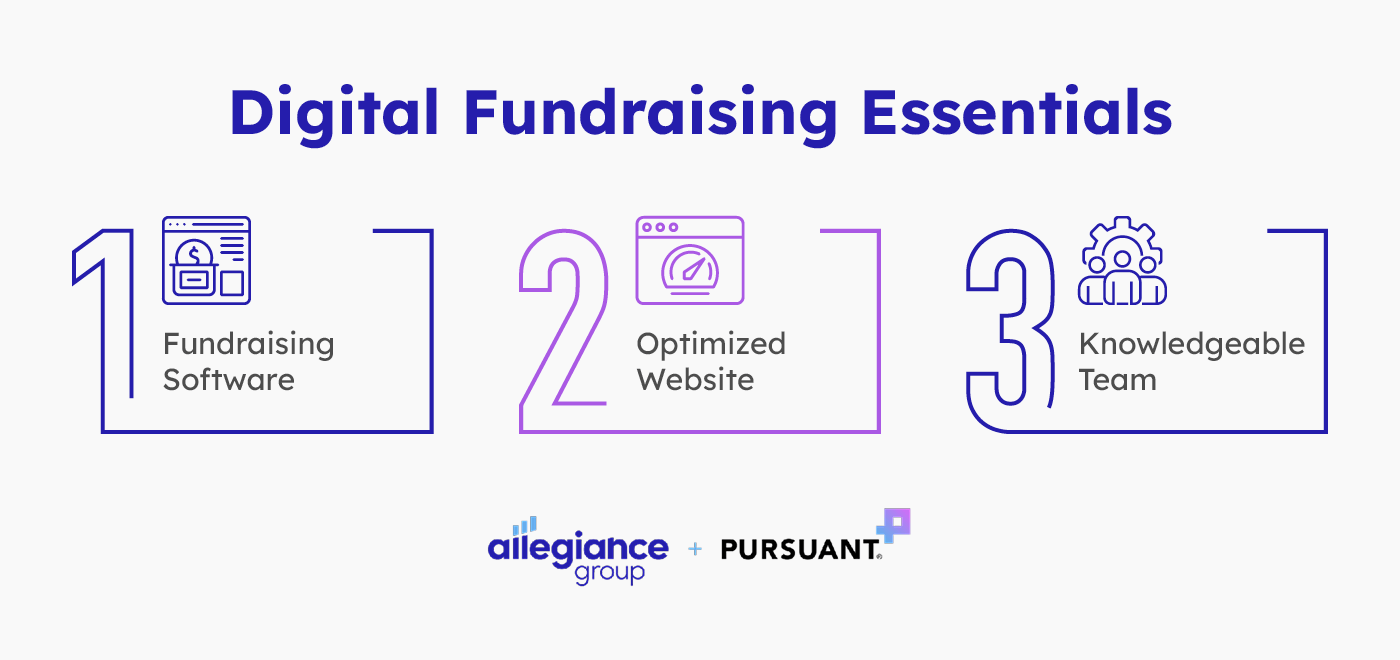
Fundraising Software
The right digital fundraising platform can make or break your campaign’s participation rates, supporter engagement, and revenue generation potential. You may need a variety of tools depending on what kind of campaign you’re hosting, including but not limited to:
- Optimized online donation pages
- Text-to-give solutions
- Crowdfunding platforms
- Peer-to-peer fundraising software
- Livestreaming solutions for virtual events
- Mobile bidding tools for online auctions
- Online inventory systems for merchandise sales
- Employer matching gift databases
To save your organization money and ensure your various fundraising activities work together, look for solutions with multiple functionalities built in. For instance, Allegiance Group + Pursuant’s online fundraising platform, Allyra, includes features for text-to-give, donation form creation, and peer-to-peer fundraising, among others.
Optimized Website
Your nonprofit’s website is the hub of its digital presence, especially for fundraising. Ensure it provides a positive user experience and is easy to find by:
- Optimizing for mobile—i.e., pages should automatically adjust to fit different screen sizes, and buttons should be large enough to easily tap on a touchscreen.
- Incorporating intuitive navigation into your website’s design so users can find what they’re looking for quickly.
- Ensuring fast page load speeds, since research shows that 40% of website visitors will leave sites that take more than three seconds to load.
- Designing for accessibility by ensuring adequate contrast between text and background colors, adding alt text to images, and providing transcripts or closed captions for audio and video content.
- Following search engine optimization (SEO) best practices to make your site more visible on Google.
Many of your digital campaigns will point back to your website—whether it’s to help supporters learn more about your mission or contribute through your online donation page—so make sure this resource is in top shape before you launch your next fundraiser.
Knowledgeable Team
Your digital fundraisers will involve staff members from across your entire organization, so they should all be well-versed in your campaign goals and understand their roles in making your efforts work. Some of these team members include:
- Your fundraising director to direct and oversee the campaign.
- Donor engagement officers to strategically connect with and thank supporters.
- Your volunteer coordinator to secure and manage volunteer help.
- Event planners to take the lead on virtual events.
- Financial professionals to create campaign budgets and ensure your nonprofit sticks to them.
- IT experts to work through any technical issues with your digital tools.
- Marketing staff to promote your fundraisers.
Seeking outside assistance from digital fundraising and marketing experts (like our team at AGP!) can also help you develop stronger campaign strategies based on experienced, objective perspectives and more effectively spread the word online.
Looking for New Donors?
Pro Tips to Transform Your Digital Fundraising Campaigns
Now that you know the basics of why and how to launch digital fundraising campaigns, let’s walk through some tips to take your efforts from good to great.
Choose Your Campaign Type Carefully
Since there are so many ways to fundraise online, you’ll need to carefully consider your nonprofit’s needs and choose the best campaign to help you reach your goal. Here is an overview of some common digital fundraisers and the needs they fulfill:
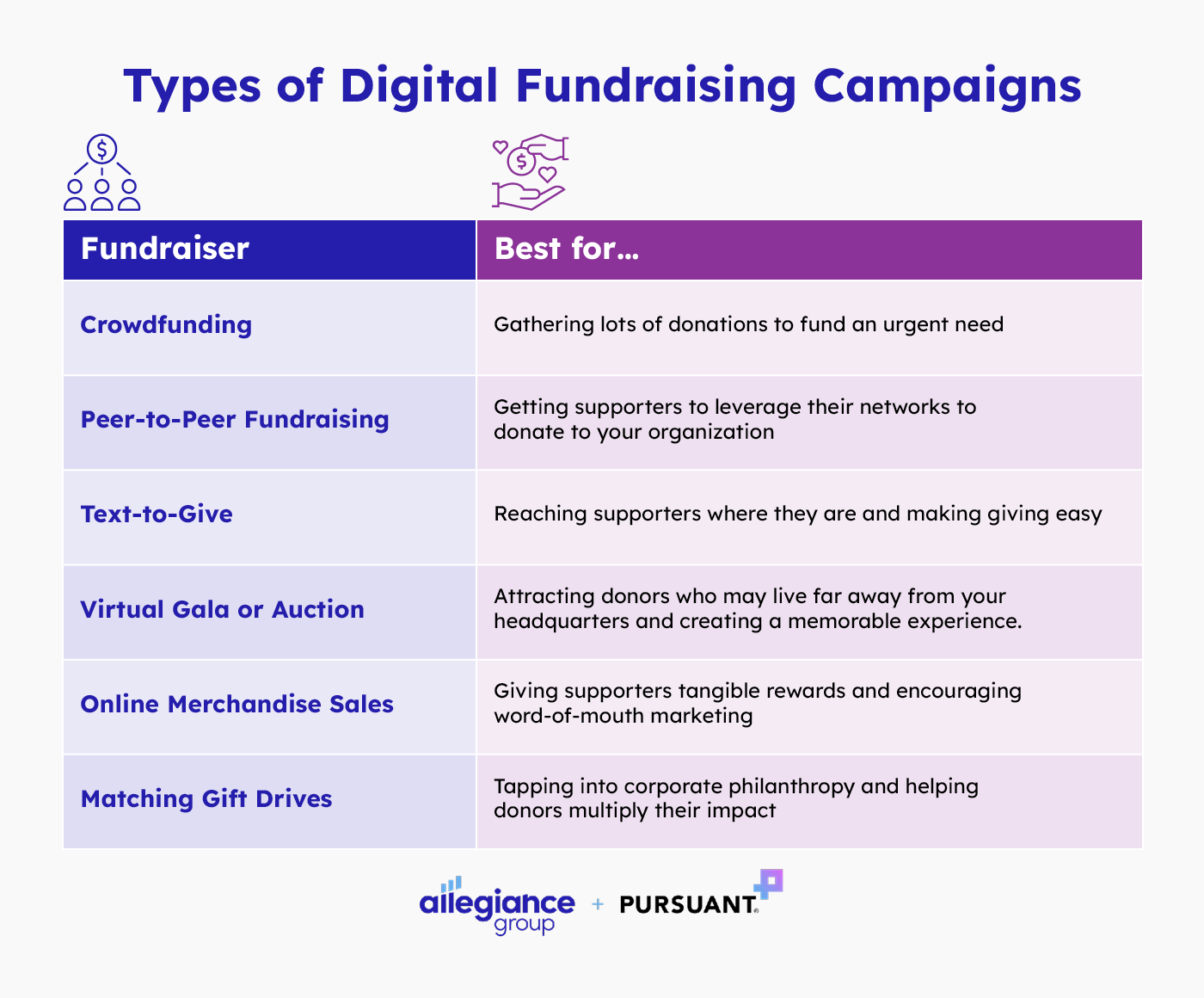
- Crowdfunding: Best for gathering a large number of donations to fund an urgent need (e.g., emergency supplies for a disaster relief organization to distribute or a rescue pet’s complex veterinary procedures at an animal shelter).
- Peer-to-peer fundraising: Best for getting supporters to leverage their networks to donate to your organization, and can be paired with an event like a 5K or walkathon.
- Text-to-give: Best for reaching most supporters where they likely are—on their smartphones—and making giving as easy as possible.
- Virtual gala or auction: Best for attracting donors (particularly those at higher giving levels) who may live far away from your headquarters and creating a memorable experience.
- Online merchandise sales: Best for giving supporters tangible rewards and encouraging word-of-mouth marketing as they wear or use your branded products.
- Matching gift drives: Best for tapping into a common form of corporate philanthropy and helping donors multiply their gifts’ impact without reaching back into their wallets.
If you aren’t sure which campaign would resonate best with your supporters, consider surveying them to get firsthand input on what they would enjoy.
Maintain Consistent Branding
Branding allows your nonprofit to stand out from other similar organizations and convey a sense of professionalism. Especially when giving online, donors need to be confident that they’re supporting your organization before they contribute. Keeping your branding consistent across all of your digital fundraising and marketing materials helps build this sense of trust.
Include the following brand elements across every channel:
- Logo. When discussing individual brands, their logos tend to come to mind first—think of McDonald’s Golden Arches on the for-profit side and the WWF panda among nonprofits. Feature this symbol of your organization front and center in all of your materials, from the header of your donation page to your social media profile picture.
- Colors. In addition to the names of your nonprofit’s brand colors, keep a record of their unique six-digit hex codes (for example, “light purple” could be #d8b8fc or #ebd9ff). That way, you can enter the codes into any graphic design tool and get the exact same shades every time.
- Typography. To add visual variety to your digital fundraising channels, choose two different fonts: one for headings and one for normal text. However, don’t use more than three typefaces to avoid a cluttered look.
- Messaging. Although people mostly associate visuals with brands, branding also extends to how you talk about your organization and mission in written content. Maintain a cohesive tone, consider your preferred word choice for common statements (e.g., does your hospital “help” people or “care for” them?), and standardize rules for mechanics (for instance, whether you use the Oxford comma) in your writing.
Create a digital style guide that compiles all of these brand elements and provides example use cases for them. This way, anyone inside or outside your organization who works on your campaigns can reference your guidelines and ensure consistency in branding.
Explore Strategic Partnerships
The digital age has broadened our connections like never before, meaning there is even more potential for your organization to form partnerships that strengthen your online fundraisers. Corporate partnerships are among the most common, since businesses are often willing to support nonprofits to give back to their communities and boost their reputations as socially responsible companies.
Your corporate partners might support your digital fundraising efforts by:
- Matching employees’ donations
- Encouraging volunteerism through programs like volunteer grants or paid volunteer time off
- Sponsoring virtual events
- Offering co-marketing opportunities
- Hosting internal employee giving campaigns that dovetail with your digital fundraisers
For-profit companies aren’t the only organizations you could partner with, though. Other nonprofits may be willing to collaborate in your efforts, such as by hosting a joint campaign and splitting the proceeds. Either way, strategic partnerships can expand your digital fundraisers’ reach in the community and help you make the most of your resources.
Maximize Your Campaign Marketing ROI
Your nonprofit’s website, email, and social media are all great places to promote your digital fundraising campaigns. However, there is another highly effective method you may not have tapped into: digital advertising.
Most nonprofits that run paid ads online leverage social media and search engine advertising opportunities, although audio and video ads (such as those that run during podcasts or on ad-supported streaming services) are growing in popularity. The Google Ad Grants program is a starting point for many, but building on that program to develop a full-scale advertising strategy increases your organization’s return on investment (ROI).
Effective advertising can get your nonprofit’s campaigns in front of supporters who may never have interacted with your organization otherwise, whether they’re searching for “animal shelters near me” or bingeing their favorite show. However, to effectively weave digital ads into your campaign marketing strategies, it’s best to consult the experts.
Learn more about digital advertising on AGP’s podcast, Go Beyond Fundraising
Promote Recurring Giving
Recurring giving is a win-win for your nonprofit and its donors. By opting into recurring giving, donors can automate their contributions on a regular schedule (usually monthly) and support your organization long-term with no additional work required. For your nonprofit, recurring gifts provide consistent funding—most forms of contributions tend to peak at year-end and die down in the summer, but you can rely on recurring donations to come in year-round.
Encourage donors to join your recurring giving program by:
- Leading communications with a recurring gift ask rather than a request for a one-time gift. (This approach may yield fewer initial donors but has a better long-term impact on ROI.)
- Adding buttons to your donation page that allow donors to opt in with just a few clicks.
- Sharing suggested monthly giving amounts and their tangible outcomes (e.g., a food bank could say that $20 provides a week’s meals for a family of four).
- Developing concrete and thoughtful persuasion points on the benefits of recurring donations.
- Creating various marketing materials that promote these donations.
- Providing special perks for recurring donors like early event registration or exclusive newsletters.
You could also reach out individually to donors who might be good candidates for recurring giving. For example, if someone has contributed $200 to your year-end giving campaign two years in a row, you might invite them to start giving $20 per month. They get the convenience of automating their gifts, and you get an extra $40 from them per year in addition to a steadier stream of funding.
Encourage User-Generated Content
User-generated content (UGC) helps engage supporters more deeply in your campaigns and attract new audiences from their networks. To prompt supporters to make UGC, you could:
- Create a specific hashtag for a campaign and ask them to use it when posting about it on social media.
- Run various types of contests, whether you ask supporters to vote on their favorite pet photo or new t-shirt design submitted by other donors.
- Ask supporters to review your organization on Google or other review sites.
Offer incentives for creating this content (for example, you could enter anyone who leaves a Google review into a drawing for a gift card), but don’t forget to pair UGC with direct fundraising whenever possible (i.e., only prompting donors to leave a review after they’ve donated online).
Stay on Top of Digital Fundraising Trends
Modern donors, especially younger Millennial and Generation Z supporters, expect the nonprofits they support to keep up with current trends in technology. One of the best ways to do this is to incorporate trends from the digital fundraising landscape into your campaigns. For example, you could:
- Accept new payment methods for online giving. While many online donors still prefer to give with credit or debit cards, others would use their digital wallets (e.g., Google Pay or Apple Pay) or mobile payment apps (PayPal, Venmo, etc.) if given the opportunity. Look into payment processors that accept a variety of methods like these to give donors additional flexibility.
- Promote non-cash contributions. In addition to monetary donation methods, many donors today appreciate the ability to contribute assets to nonprofits via donor-advised funds (DAFs), gifts of stock, or cryptocurrency donations. Ensure your organization has the resources to accept these gifts and communicate how supporters can do so.
- Experiment with artificial intelligence (AI). AI is a divisive topic in the nonprofit sector and among the general public—some embrace the new capabilities and automation it provides, while others are still concerned about its impacts on traditionally human-centered work. If your organization uses AI, be transparent about how you’re leveraging it and follow best practices for using it responsibly, such as ensuring data security and preventing bias.
Keep up with news on these and other related trends to ensure your digital fundraising efforts remain relevant to donors and competitive within the nonprofit sector.
Segment Your Supporters
Another way to engage your supporters in your digital fundraising campaigns is to target them directly with promotional content. Donor segmentation, or the process of grouping supporters according to shared characteristics, helps you determine (1) which campaigns will be most appealing to each donor and (2) how best to reach out to them about getting involved.
Use the following criteria to segment your nonprofit’s donors:
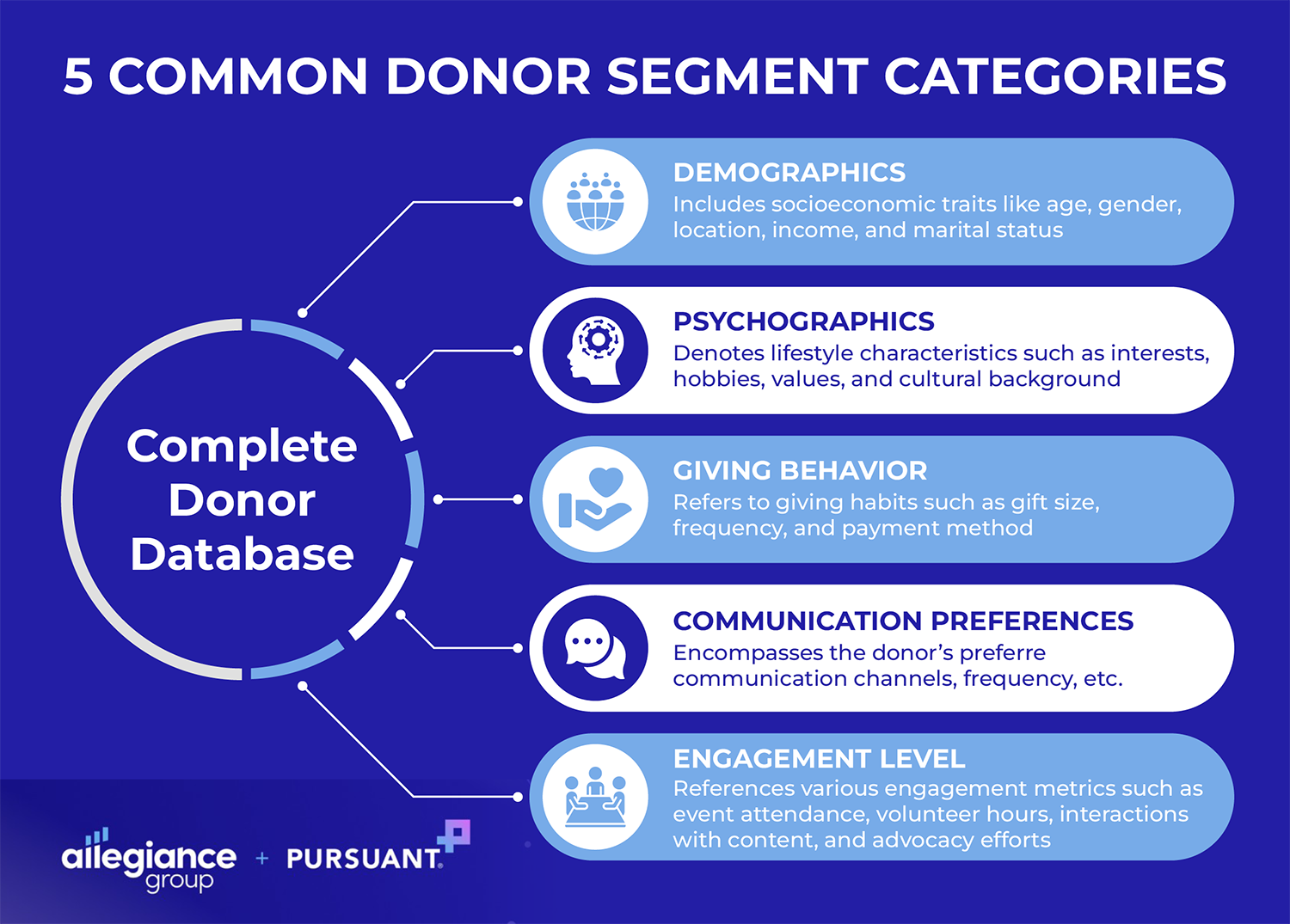
- Demographic information like age, location, income, and marital status.
- Psychographics such as interests, hobbies, values, and cultural background.
- Giving behavior, including average gift amount, donation frequency, and preferred payment method.
- Communication preferences—both channels and outreach frequency.
- Engagement level outside of donating, measured through activities like event attendance, volunteering, and advocacy (e.g., you might create segments of your most engaged donors, casual supporters, and donors at risk of lapsing).
Note these segments in your donor database so you can tell at a glance which groups each supporter belongs to. Also, use your segmentation results to create donor personas for the audiences you most want to engage so your team can strategize more effectively.
Collect & Analyze Campaign Data
As with any nonprofit effort, data collection is critical for your digital fundraisers to succeed long-term. Plus, as previously mentioned, it’s often easier to track data for online campaigns than offline ones since good fundraising software will store information automatically.
For each campaign, monitor metrics like:
- Revenue totals
- Fundraising ROI
- Total number of participants
- Average gift size
- Donor acquisition rate
- Donor retention rate
- Conversions from each marketing channel
- Participant satisfaction ratings and reviews
After your fundraiser, analyze this data to determine what went well and where you could improve, then use those insights to make future campaigns even better.
Wrapping Up: Additional Resources on Digital Fundraising
With a solid strategy and the right tools, you’ll be well on your way to successfully generating revenue for your nonprofit in the digital age. Use the best practices above to get started, and don’t hesitate to reach out for expert help whenever you may need it.
For more information on digital fundraising, check out these resources:
- How to Get Donations for Your Cause: 10 Best Practices. Explore more essentials of effective nonprofit fundraising—both online and offline—in this comprehensive guide.
- An Inside Look at Crafting a Strong Nonprofit Marketing Plan. Dive deeper into strategically promoting your nonprofit’s digital fundraisers by creating a clear plan.
- Launch Your Mid-Level Giving Program This Year in 5 Steps. Mid-level donors often represent your most loyal, enthusiastic supporters. Learn how to cater to this key supporter segment.