

Direct mail fundraising should be an integral part of your nonprofit’s direct response strategy. When leveraged with other communication channels, direct mail can generate significant engagement and gift-giving from donors. Direct mail fundraising can also feel more personal for donors, especially when your messaging aligns with their preferences.
In this guide, we’ll help your nonprofit understand direct mail fundraising basics and how to launch your own campaign:
- Top Direct Mail Fundraising FAQs
- Steps in the Direct Mail Fundraising Process
- Partnering With a Direct Mail Agency
Putting together an effective direct mail fundraising campaign requires a significant amount of time and effort, from researching your nonprofit’s current marketing position to developing creative concepts. Because this process can be so extensive, it’s best to partner with a team of experienced marketing experts when launching a new direct mail program.
Let’s get started!
AGP makes achieving direct mail success simple.
Direct Mail Fundraising Questions, Answered
What is direct mail fundraising?
Direct mail fundraising, sometimes called direct mail solicitation or direct marketing, is the process of mailing requests for support to existing and prospective donors.
Direct mail gives your supporters a physical object to connect them to your organization, making it a highly personal way to reach out. Additionally, holding onto physical mail may remind them to make another gift in the future.
Does direct mail work?
Yes, direct mail fundraising does work. While some believe that direct mail is ineffective or even “dead,” this is far from the truth. While digital outreach is popular, studies indicate that consumers are overwhelmed by digital communications. Thanks to the intimate yet non-invasive nature of direct mail, 75% of marketers who participated in the study reallocated their budgets into direct mail.
Due to donors experiencing higher trust and lower fatigue through this channel, audiences are likely to open and engage with direct mail. On average, direct mail sent by nonprofits has an open rate of 34.12%—higher than the average email open rate of 28.59%.
What are the benefits of direct mail fundraising?
Direct mail can benefit your nonprofit in many ways, from connecting with donors in a personal way and yielding a high ROI. Some of the other reasons to use direct mail fundraising include:
- High returns. While digital ad and postage costs have both increased, direct mail delivers promising returns. A study analyzing more than 114,000 conversions found that direct mail leads generated 600% more revenue than leads from Google Ads. Revenue is on an upward trajectory, with direct mail revenue increasing by 14% in 2024.
- The messages are more tangible. Donors can hold direct mail in their hands, making the message feel more real and inspiring than digital messages. This also gives direct mail a longer shelf life. For example, the messages are more likely to be referenced again if the supporter hangs the mail on their fridge or leaves it on their kitchen table.
- Direct mail reaches different audiences. Some of your supporters may not engage with digital platforms like social media or email regularly. Direct mail allows you to reach those who prefer more traditional communication channels.
- Mail enhances trust and credibility. A well-designed, professionally executed direct mail conveys professionalism and legitimacy. This builds your reputation as an established, trustworthy organization.
Direct mail fundraising can be a valuable part of your organization’s fundraising and marketing strategy, particularly when integrated with other channels. Link direct mail to other channels using scannable QR codes that lead to landing pages, donation forms, or social media posts. Consider pairing each direct mail campaign with email follow-ups that reinforce the key message and encourage supporters to donate online.
When should nonprofits use direct mail?
Direct mail can and should be used for more than just fundraising asks. Instead, use it to build rapport with supporters and achieve goals like:
- Acquiring new donors. Engage new prospects with direct mail, particularly audiences who trust and respond better to traditional channels over digital ones.
- Encouraging renewals or upgrades. Remind existing donors of your continued need for support and the impact of their past donations. Use this personal, genuine channel to urge them to give again or increase their level of support.
- Supporting other channels. Direct mail functions best when it’s part of a well-rounded, omni-channel campaign. Send direct mail alongside emails, texts, ads, and social media posts to establish multiple touch points with donors and boost your credibility. Additionally, drive digital engagement with URLs or scannable QR codes.
- Stewarding donors. With nonprofits facing funding uncertainty, individual giving is more important than ever. Use highly personal, meaningful channels like direct mail to thank donors for their gifts, communicate the impact they’re making, and ensure they feel valued.
Direct mail can also be used to promote events, serving as a tangible reminder to attend. Mail out formal invitations for galas or auctions, or send simple save-the-dates for a charity race.
5 Steps to Enhance Your Direct Mail Campaign
Designing a direct mail fundraising campaign involves many moving parts, from conducting intensive donor research to enlisting marketing strategists who will develop messaging frameworks and concepts. Partnering with a qualified agency with years of experience can help you manage these various parts and form a cohesive, high-quality final product.
Let’s take a closer look at each stage of designing a direct mail campaign.
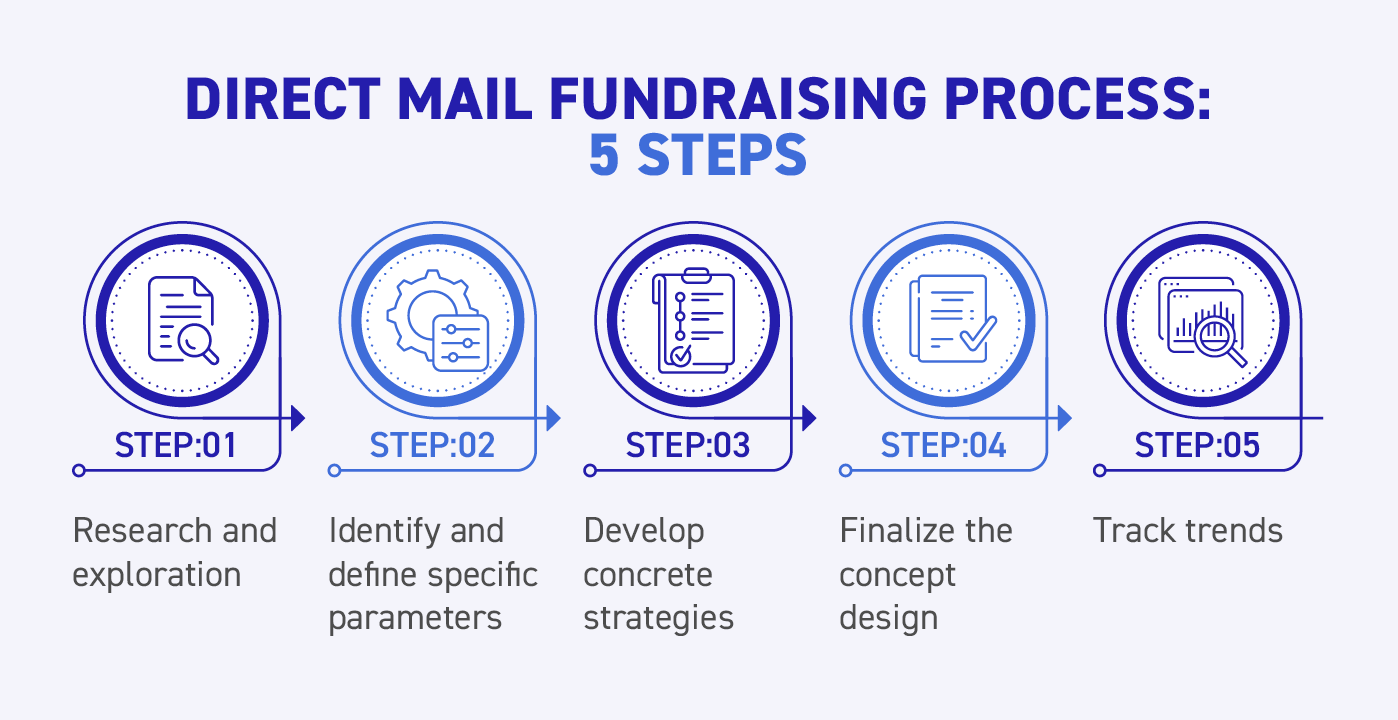
1. Research and exploration.
The first step in creating any marketing campaign is to conduct preliminary research that investigates and explores data about your organization’s current audience and past campaigns.
Analyzing your nonprofit’s data and industry trends can uncover insights about:
- Existing donors. Gain a deeper understanding of your nonprofit’s current donors to better understand why they give—in other words, get familiar with their “giving DNA.” Take stock of social media followers, event attendees, volunteers, and your most dedicated advocates and ambassadors. After assessing how these donors already interact with your nonprofit, you can build target donor profiles based on demographics, psychographics, giving habits, and preferred communication channels.
- The market landscape. Conduct research about your organization’s specific market, working to identify marketwide consumer and technology trends. If you run an animal shelter, most people likely give to peer organizations because they want to support the cute animals that wind up there. Then, look for an appeal you can use in your direct mail campaign that sets you apart, like highlighting unique programs your organization offers. Your team can also analyze each geographic market, investigating the awareness of and affinity for your nonprofit in specific states and regions.
- Peer organizations. Evaluate peer organizations to identify your peers’ strengths and weaknesses, compare them to yours, and find opportunities to differentiate your organization. As a nonprofit organization, you’ll want to dig into why their constituents are motivated to give and how much of your market they occupy. If you find constituents who support a cause similar to yours that highly value transparency and community-driven outreach, you’ll want to differentiate your nonprofit by highlighting those qualities in the direct mail you send out during your campaign.
This initial phase of research can give you and your direct mail fundraising partners a better idea of what your organization is working with, what the broader market of supporters value, and how you can stand out against peer organizations. Once you have a deep understanding of your position in the market, you can begin outlining specific focus areas that will shape your direct mail campaign’s message.

Get our expert tips for uncovering the reasons behind your donors’ generosity.
2. Identify and define specific parameters.
After completing the research phase, you’ll work with your partner agency to identify clear key audiences, define the campaign’s goals, and build frameworks for tracking its performance.
To identify a target audience for your campaign, you’ll need to dig deeper with your research. Take a closer look at both your existing supporters as well as how the general population interacts with similar organizations to identify their motivations for giving. Then, pair those motivations with demographic descriptors to paint a more detailed picture of the audience your direct mail fundraising efforts will target.
Here are a few activities to consider completing during this step:
- Performing motivation-based research. Use insights from the motivation-based research to create donor personas—or an archetype of your ideal donor that defines their basic characteristics like demographics, preferences, and attitudes.
- Conducting a marketing opportunity analysis. Identify potential ways to reach new supporters or grow your fundraising revenue. For example, maybe you plan to hold an event that will attract new audiences. After the event, leverage attendees’ contact information by engaging them with your direct mail campaign.
- Gathering missed connection insights. Missed connections occur when your nonprofit fails to engage a new supporter long enough to establish a relationship or inspire a donation. Identify where these missed opportunities occur and aim to fill in the gaps.
When your nonprofit has a deep understanding of its donors’ affinity for your cause, it can create messages that pinpoint the specific reasons they support your cause.
Once you’ve gathered and interpreted these data points, use the audience profiles and market opportunities to structure early concepts for your direct mail campaign. Continue to use this data to justify the decisions you make for the campaign.
3. Develop concrete strategies.
After performing extensive research and organizing your findings, you and your direct mail agency can begin brainstorming potential concepts for the campaign. Start by mapping the journey your supporters follow when engaging with your organization. Map their first touchpoint or exposure to your nonprofit (which is often a visit to your website) all the way to the step when they make a donation. Within those steps, look for gaps in the journey where potential supporters might abandon the process before they give.
These gaps can help you spot opportunities to leverage the power of direct mail fundraising to recapture prospective and current donors who may have strayed from your nonprofit. A personalized, engaging campaign can also deepen relationships with supporters who are already passionate about your cause. Intertwining what you know about your audience and their giving journey with strategy and creative executions can create an impactful and effective campaign.
Consider incorporating these strategies into your preliminary concepts for the campaign:
- Leverage storytelling. Direct mail should feel personal—after all, your organization took the time to have something delivered directly to your donors’ homes. Take advantage of that personal touch by adding a story designed to strengthen your connection with donors even more. Choose a real story that is highly relevant to your cause, adding illustrative details that make it come to life on the page. Make sure to highlight the specific ways that each donor can personally make a difference in the context of the story.
- Choose impactful visuals. While visuals are often used to capture the recipient’s attention, your primary goal should be to connect the visual aspects of the mailer to the message in your copy. When selecting an image, choose one that represents your cause or aligns with the story you tell in a powerful way. Additionally, make sure to include other graphic elements, such as color and icons, that will help guide each viewer’s eye across the page to the main focus and make your appeal stand out visually.
- Link your direct mail and online fundraising campaigns. There are so many channels donors can use to engage with your organization, but digital media channels are one of the most popular. Provide a way for donors to find and engage with your online fundraising campaigns through direct mail to encourage more involvement and introduce them to another touchpoint. Consider including your website’s address or a QR code linking to your site or donation page on the mailer.
As you begin transforming small, abstract ideas into concrete first drafts, continuously check in with your audience research. Identify any major changes that come up if they have the potential to impact the campaign’s success. To confirm that your strategies are effective and align with your audience’s preferences, conduct tests with members of your target audience, measuring brand awareness and likelihood to support your cause.
4. Finalize the concept design.
The next step in the planning process is to choose winning concepts and refine and finalize them. Data comes in handy again at this step. Use the data you’ve gathered along the way to narrow down your most effective concepts and messaging strategies.
Next, prioritize the best ways to implement the overarching concept or message in your direct mail campaign. Use the past performance of similar concepts as a predictor of your new strategies’ success. Ask yourself and your team questions like:
- Does the concept highlight your organization’s general mission or cause?
- Does it help fulfill your organization’s overarching goals (e.g., increasing retention or meeting an ambitious funding goal)?
- Do your direct mail appeals lead your audience to take a specific action to meet those goals?
Asking these questions ensures that you choose a concept that works for both your audience and your organization.
As you finalize your concepts and refine creative executions, begin drafting a specific timeline and implementation plan for the campaign. This plan is where your research, goals, task assignments, and resource allocation guidelines will live. Use this plan to guide the entire campaign, helping keep everyone on the same page and making the campaign run smoothly.
5. Track trends.
Keep your finger on the pulse of direct mail trends and audience preferences. These trends reveal what your peers are doing and what strategies resonate most with audiences. Study these patterns, compare them against your audience’s preferences, and adjust your strategy accordingly.
Some of the top trends in direct mail include:
- Using postcards and folded self-mailers. Because these types of direct mail do not use envelopes, they are excellent for organizations working with tighter budgets or aiming to boost sustainability. Keep in mind that envelopes are still effective, and long-form letters are necessary for more formal situations (e.g., asking a donor to upgrade their monthly donation).
- Adding QR codes to mail. While adding QR codes is by no means a new trend, more organizations continue to adopt this strategy. QR codes are such a simple way to tie your direct mail to your digital marketing efforts, and they’re simple to incorporate into your mail designs. Plus, this strategy may become the norm for direct mail as more organizations use it.
- Including more copy on direct mail. Between 2020 and 2023, direct mail copy length increased, which contradicts the longstanding downward trend in word count. Within this period, all direct mail formats increased by an average of 146 words, or 26%. This could give your nonprofit a little more wiggle room when writing direct mail copy.
- Thinking outside the box with embellishments. Embellishments add sensory appeal to direct mail, making it more memorable and interactive. These may include scents, different textures, foil, glitter, and more. Adding embellishments can be more expensive, but the USPS offers discounts to incentivize organizations to use them.
Remember that overall, it’s more important to align with what your supporters want rather than blindly following trends. Refer to your data to make inferences about what would motivate your audience to engage. An experienced marketing agency can also provide guidance about which tactics and strategies to use.
VPM earned a 255% ROI with an integrated direct mail marketing campaign.
Partnering With a Direct Mail Agency
Your direct mail fundraising campaign will be at its most effective when a deep knowledge of your donors is coupled with marketing expertise, which is where a professional agency comes in.
Think of a direct mail agency as an extension of your team that will align your knowledge and passion for your cause with data analytics and effective marketing strategies.
AGP is a full-service marketing and fundraising agency that primarily serves the nonprofit sector, giving our team of experts an intimate understanding of your industry. Our skilled team provides the following direct mail fundraising services:
- Campaign management, including planning, strategy, and execution
- Copywriting, design, and development
- Printing and mailing
- Testing and optimizing
- Acquisition list planning and data analysis
- Mid-level and upgrade programs
- Direct mail fundraising enhancements, such as USPS Informed Visibility
Explore the following examples of our work, and see more by checking out our case studies.
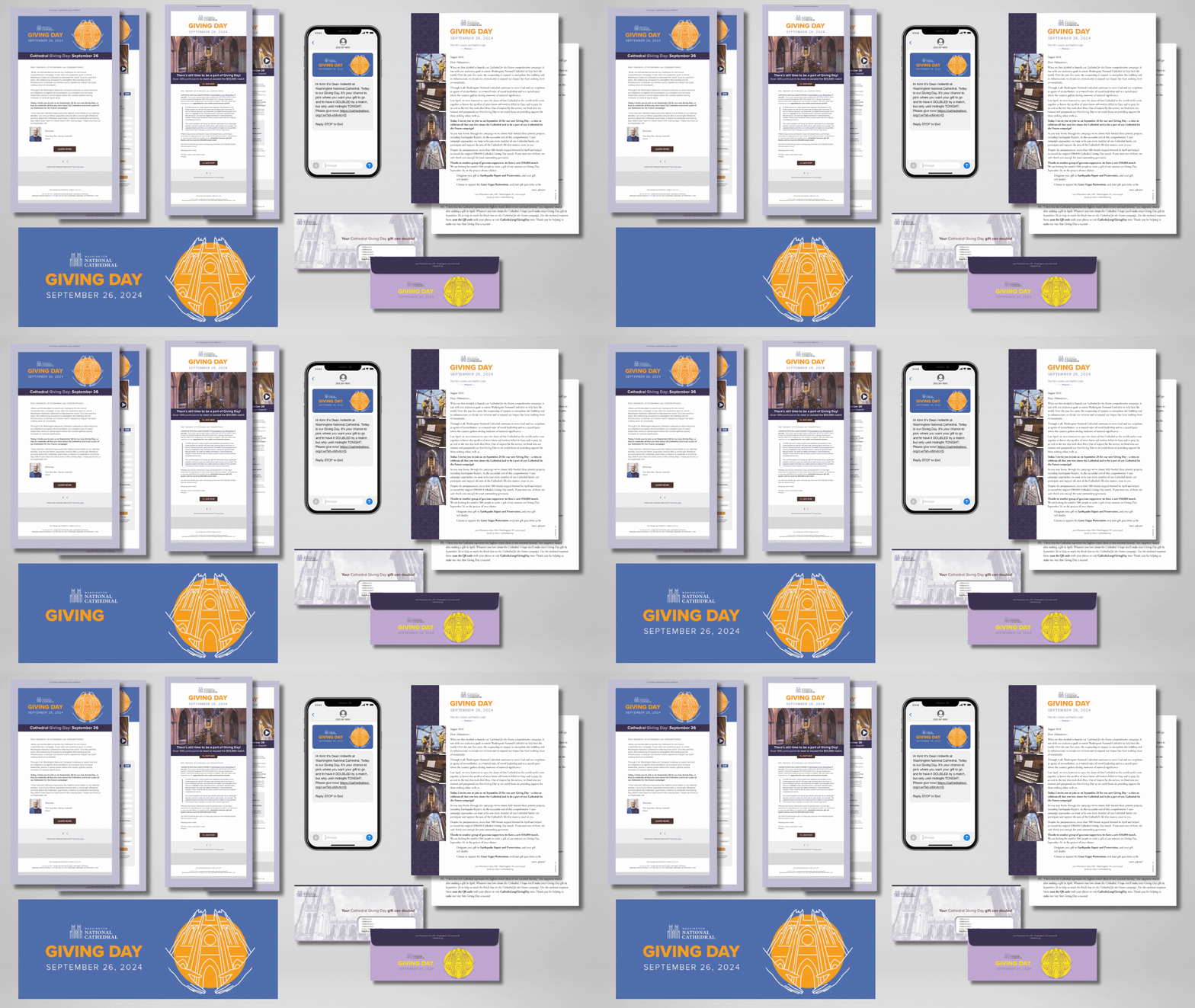
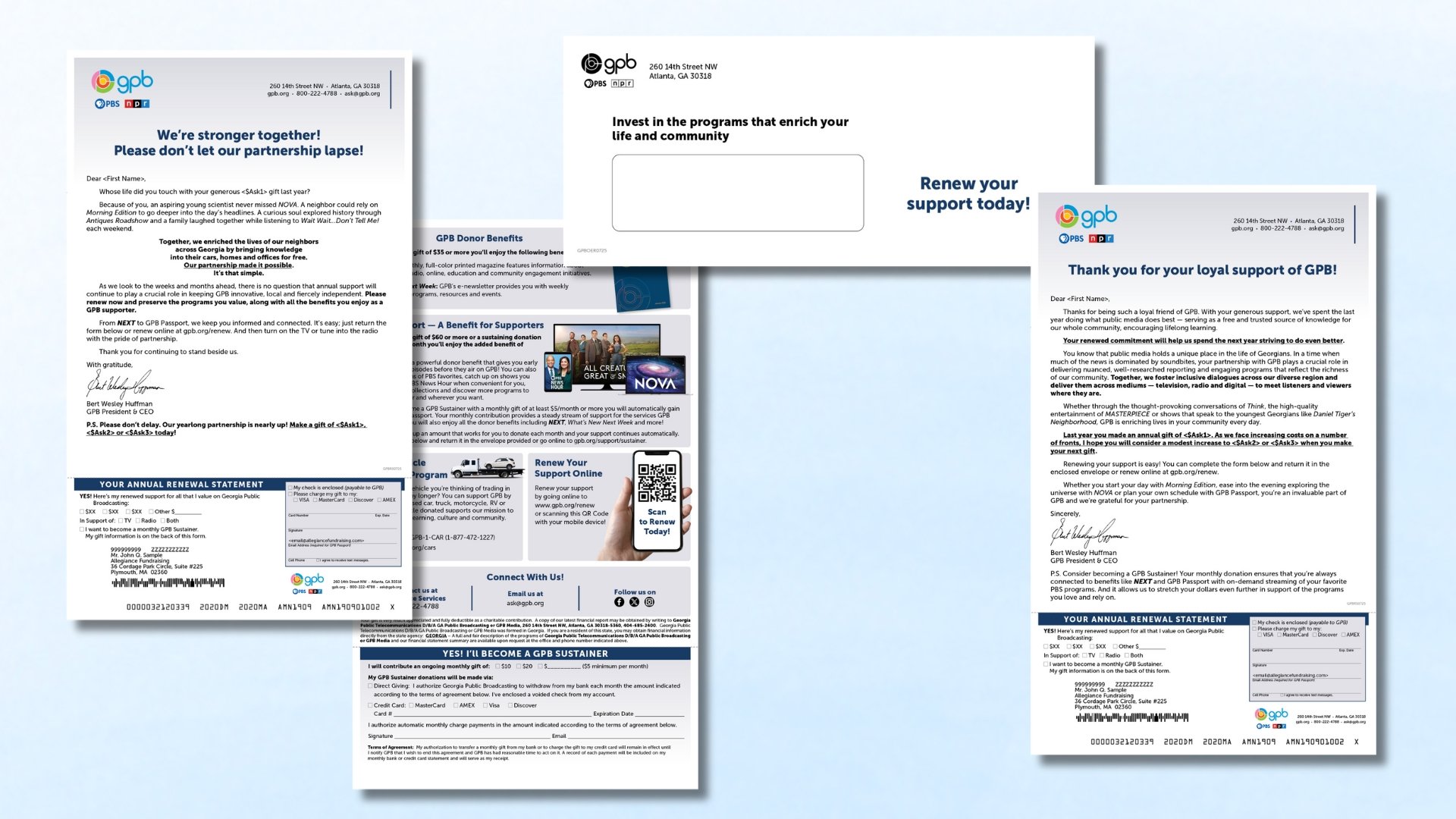
Our full-service agency also offers digital marketing services, website and app development, campaign strategy and planning, UX and brand design, and tools for fundraising and incentive programs. Reach out today to get connected with our team of experts!
Wrapping Up
Direct mail is one of the most effective ways to market your cause to both new and existing donors. Effective planning and diving deep into your donors’ giving motivations, lifestyles, and demographic information will help you develop concepts for your campaign that inspire your donors to make long-term contributions.
Working with an experienced agency can help your team maximize its success by pairing important insights about your audience and market with the devotion you have to your mission. Check out these additional resources to learn more about fundraising and growing your nonprofit:
- Unlock the Secrets of Digital Marketing for Nonprofits. Your digital marketing efforts should complement direct mail campaigns. Learn how to optimize your online presence in this comprehensive guide.
- An Inside Look at Crafting a Strong Nonprofit Marketing Plan. Direct mail should be one piece of your full marketing plan. Discover what to include in your nonprofit’s marketing plan here.
- Discover Nonprofit Web Design Essentials + 5 Examples. Where will supporters go after receiving your mailers? Your website. Explore this guide to make sure your web design is as engaging and intuitive as possible.