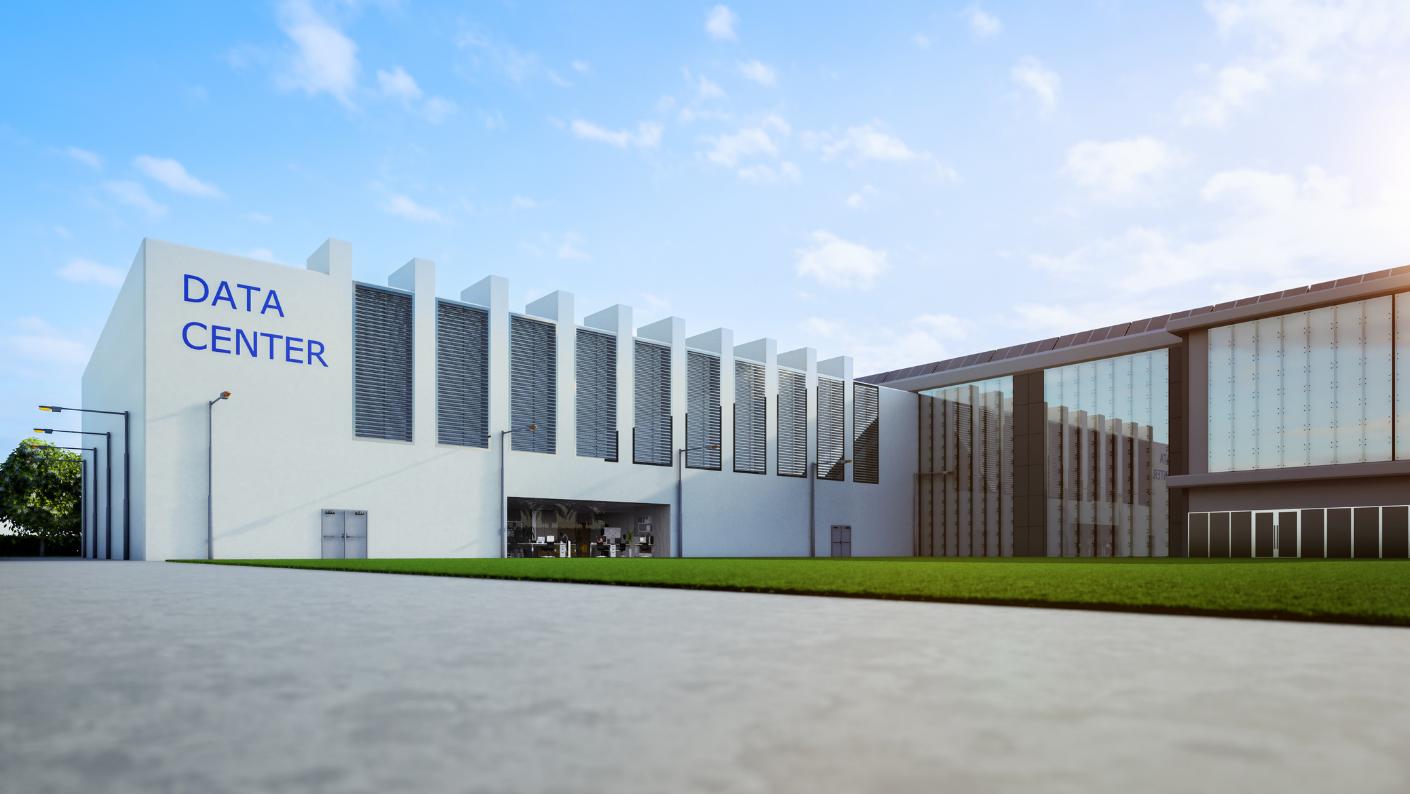
As AI demand accelerates, the communities hosting data centers are carrying the burden.
The rapid buildout of data centers to support AI is raising concerns about both environmental impact and the effects on host communities. These facilities require significant amounts of energy and water, placing additional strain on the places where they are built. Many of these communities are rural or majority-Black or Latino and are already dealing with water scarcity tied to drought and climate change. At the same time, residents often face higher utility costs while data centers receive tax incentives and deliver less economic and job growth than initially promised.
I want to be clear about where I’m coming from. I work in AI, and I believe in what this technology can do for the nonprofits and missions I support. We are going to need more data centers to make that possible. But we do not need to build them at this pace or in this way. Right now, the burden is falling on the communities where these facilities are built. These communities are facing higher utility costs, more strain on local resources, and limited economic return. Solving that means investing in infrastructure differently and setting stricter regulations for the corporations building it. Without that kind of oversight, the system will continue to favor what is fastest and cheapest, even when the consequences are borne by those marginalized communities.
How This Shows Up in Real Communities
The impacts of data center expansion are already showing up in specific communities across the United States with very limited benefits. Research into major subsidy deals shows that data centers often produce relatively few long-term jobs. Most employment is temporary construction work, with permanent staffing typically in the low hundreds. The examples below highlight how decisions around siting, energy use, and regulation translate into real-world consequences for residents.
- Box Elder County, Utah — Large-scale approval despite opposition: A 9-gigawatt data center campus was approved in May 2026 despite more than 2,500 public objections and significant water-rights protests. Residents raised concerns about resource strain and scale relative to the region’s grid, highlighting how local approval processes can override substantial community pushback.
- PJM Grid (Mid-Atlantic) — Rising electricity costs tied to demand growth: Capacity prices increased sharply between 2024 and 2027, with grid operators pointing to large new loads as a primary driver. Utilities in Virginia, D.C., and Ohio passed these increases through to households, showing how concentrated data center demand can directly raise consumer energy bills.
- Memphis, Tennessee — Air quality concerns from rapid deployment: A major AI compute facility was rapidly deployed using on-site gas turbines near residential communities. Reported increases in localized air pollutants raised health concerns, underscoring the risks when infrastructure buildout outpaces regulatory oversight.
- Chandler, Arizona — Noise regulation after community complaints: Ongoing complaints from nearby residents about persistent noise led the city to adopt stricter limits and require independent acoustic studies. The resulting rules require that operating noise not exceed pre-construction baseline levels measured at the property line, demonstrating how quality-of-life impacts often require post-development regulation.
- Loudoun County, Virginia — Lighting standards in development: Rapid data center expansion created visible skyglow across the region. The county already limits light trespass and skyglow through its zoning code, and it has made data center lighting standards a priority in a new round of regulations being drafted for adoption in late 2026, showing how large-scale infrastructure can alter surrounding environments.
The Path We Are On: How Many Data Centers Are Coming
If the impacts we are seeing today feel significant, they are also just the beginning of what is already planned. Industry forecasts point to a sustained buildout of large-scale data centers throughout the rest of the decade. Roughly 130 to 140 new hyperscale data centers are expected to come online globally each year, a pace far above what the industry was adding a decade ago.
The United States is expected to host a disproportionate share of that growth. Today, it already accounts for more than half of global hyperscale capacity, and projections show that dominance continuing as companies prioritize regions with available land, energy, and regulatory pathways. That translates to dozens of new large-scale facilities in the U.S. every year through the late 2020s, on top of the more than one thousand hyperscale sites already in operation globally.
And the number of data centers only tells part of the story. New facilities are getting significantly larger. The total capacity of hyperscale data centers doubled in under four years, driven by the extreme compute demands of AI workloads. In practical terms, that means the physical footprint, energy demands, and water usage tied to each new project are increasing even faster than the facility count itself.
This is a multi-year buildout measured in hundreds of new facilities globally and trillions of dollars in infrastructure investment by 2030, with the United States at the center of that expansion.
What Could Reduce the Impact (But Doesn’t Fix the Problem)
Building more efficient, better-operated data centers and energy grids can mitigate these impacts, but only if clear standards are enforced. New facilities should be required to use the most advanced technologies available, and there must be enforceable limits on how much energy, water, and grid capacity they consume. Corporations do not need more blanket tax breaks; they need regulatory pressure and targeted incentives that require continued innovation and the development of more sustainable infrastructure. Here are some examples of advances in technology that can help:
- Cooling is shifting toward closed-loop and low- or near-zero-water designs. Direct-to-chip and recirculating systems reduce on-site water use, particularly in water-constrained regions. But these approaches are not yet standard, and they primarily improve efficiency per unit of compute rather than reducing total consumption. As demand continues to scale, overall water impact is still increasing.
- Hyperscalers are buying firm clean power. Long-term agreements for nuclear, geothermal, and other firm energy sources are accelerating, with multi-gigawatt commitments from Microsoft, Amazon, Google, and Meta.
- Efficiency is improving. Advances in chip architecture and model design are delivering more compute per unit of power, slowing the growth curve even as demand rises.
- Grids are becoming more flexible. Initiatives like EPRI’s DCFlex are testing how large loads like data centers can shift or reduce demand during periods of grid stress.
These are meaningful advances, but they do not address the core issue of distribution. Even if every one of these commitments lands on time, they are only keeping pace with new demand, not reducing the burden on the communities already hosting this infrastructure. Legacy facilities continue to operate with outdated technology, and there are no consistent requirements to ensure new developments align with community needs.
Regulations Can Make a Difference
If the last two years have shown anything, it is this: the private AI sector will move faster than the systems designed to protect water, air, ratepayers, and neighborhoods. Almost every meaningful constraint on that growth has come from rules, not voluntary action.
In Virginia, those interventions are happening across multiple layers of government. The State Corporation Commission has moved to address how large data centers bear long-term grid costs, including scrutiny over who pays for transmission upgrades and capacity expansion tied to large loads. At the local level, Loudoun County eliminated by-right zoning for new facilities, requiring public hearings before approval. And in Prince William County, courts voided the rezoning for the massive Digital Gateway project over inadequate public notice, a ruling upheld on appeal that ultimately ended the development in July 2026. Together, these actions show how utility regulation, land-use policy, and judicial review are all being used to slow or reshape development.
Other states are taking different approaches, expanding the regulatory playbook beyond Virginia. Oregon has pursued utility tariff structures that place additional cost responsibility on very large electricity users, explicitly recognizing data centers as a distinct class of demand. California is moving toward stronger emissions disclosure requirements for large operators, increasing transparency around environmental impact while tying reporting to broader climate accountability frameworks. In Texas, policymakers and grid operators have begun examining how large flexible loads like data centers can participate in demand response and grid reliability programs, reflecting concerns about peak demand and system stability. In states like Arizona and Georgia, rapid data center growth has triggered renewed debates over water usage permitting, long-term resource planning, and whether existing siting rules are sufficient for facilities at this scale.
Across all of these cases, the most meaningful constraints are emerging where states treat data centers not as typical commercial users, but as infrastructure with system-level impacts. Harms do not slow because companies choose to move more carefully, they slow when rules require them to.
What can you do as a nonprofit leader
There has always been a tension between new technologies and the social and environmental costs that come with them. For nonprofit leaders, that tension is especially real. The missions we serve depend on the communities most likely to feel those costs, while the work itself is under constant pressure from limited resources, staffing gaps, and funding that never quite reaches what the need actually requires.
That does not mean AI is off the table. It means we should use it with intention, in places where it genuinely reduces friction and helps us deliver on the mission we already have.
Think about where your organization is falling behind or staying stuck. A case manager spending hours each week manually transcribing client intake notes into your database instead of with clients. A development team copying and reformatting grant data from one system to another because your tools do not talk to each other. A program director who knows the outcome data exists but has no bandwidth to analyze it before the next board meeting. A communications team rewriting the same donor email six ways depending on the segment, all by hand, every campaign cycle.
These are everyday friction points that slow mission delivery, burn out good staff, and make it harder to demonstrate impact to funders. AI can help reduce that friction in ways that were genuinely out of reach two years ago, without requiring a large budget or a technical team.
The calculus is straightforward: if AI can help you do more for the people you serve, use it. Just go in with clear intent, grounded in your values and your actual needs, rather than adopting tools because they are new.
What community action looks like in practice
Most of the decisions that determine where and how data centers get built are made locally. The communities absorbing those costs are often the same ones your organization already serves. Educating your neighbors and community members you come across in your daily life about what is happening and encouraging them to show up and participate when these decisions are being made is something we all can do. In the past few years, at least 142 resident-led groups across 24 states have formed in response to data center developments.
Support the organizations already involved.
Organizations like the NAACP, Food & Water Watch, Clean Water Action, and the Sierra Club are pushing efforts locally and federally to keep communities and resources protected.
The NAACP has taken legal action over pollution tied to data centers, including suing a data center operator in the Memphis area over unpermitted gas turbines. Across multiple states, organizations like the Sierra Club and Clean Water Action have been part of regulatory fights that forced additional environmental review.
Food & Water Watch helped organize a coalition of more than 200 organizations calling for a nationwide pause on new data center construction. They scored a major victory in New York, which in July 2026 became the first state to pause new large-scale data centers through a one-year moratorium covering facilities over 50 megawatts.
Coordinated pressure from these groups has led to concrete actions like projects being forced into additional permitting processes or regulators requiring companies to comply with environmental rules they initially tried to bypass.
Vote in local elections.
Zoning, permitting, and tax decisions are handled locally, often by a small number of elected officials. Your local town council just got a lot more important and small local elections cannot be overlooked.
In Cascade Locks, Oregon, voters recalled two members of the Port of Cascade Locks commission who had approved a data center project. The newly elected board canceled it.
In Warrenton, Virginia, residents replaced every town council member who had supported a data center proposal over two election cycles. The new council then banned future data centers from the town entirely.
These decisions happen at the local level of port commissions, town councils, and county boards. The same votes that approve projects can also reverse them.
The power of local grassroots groups.
Sometimes the best thing you can do is form a local group with your neighbors and stand up for your communities. We have seen a lot of pressure being applied by everyday people that is having the biggest effect on data center expansion.
In Pennsylvania, Stop Archbald Data Centers grew to more than 5,000 members, nearly two-thirds the size of the town itself, raised roughly $25,000 for legal challenges, and used that to contest permits and technical studies during approval hearings.
In Utah, a local group called Box Elder Accountability Referendum (B.E.A.R.) filed referendum applications to challenge approval of a large AI data center project and push the decision back to voters, before the county blocked the effort from reaching the ballot.
In New Orleans, Louisianna and Madison, Wisconsin, local pressure led city councils to pass temporary moratoriums on new data centers so impacts could be reviewed before additional projects moved forward.
Most of this runs through the same processes: hearings, zoning appeals, environmental reviews. Communities show up there, challenge approvals, and in some cases force projects to stop, change, or go back through review.